


Share:
The Office of Sustainability and Social Responsibility at Feng Chia University, in collaboration with the Taichung Huanzhong Rotary Club of Rotary International District 3462 Area 1-3, several partner organizations, and the Feng Chia Night Market Management Committee, organized the“Leave No Trace” community clean-up campaign on August 16 in the neighborhoods surrounding the University. Making its first appearance in Taichung, the initiative brought together nearly 100 Rotary members, Feng Chia University faculty and students, local residents, and youth volunteers to collect cigarette butts from streets and public spaces, helping prevent harmful chemicals from entering drainage systems and marine environments.
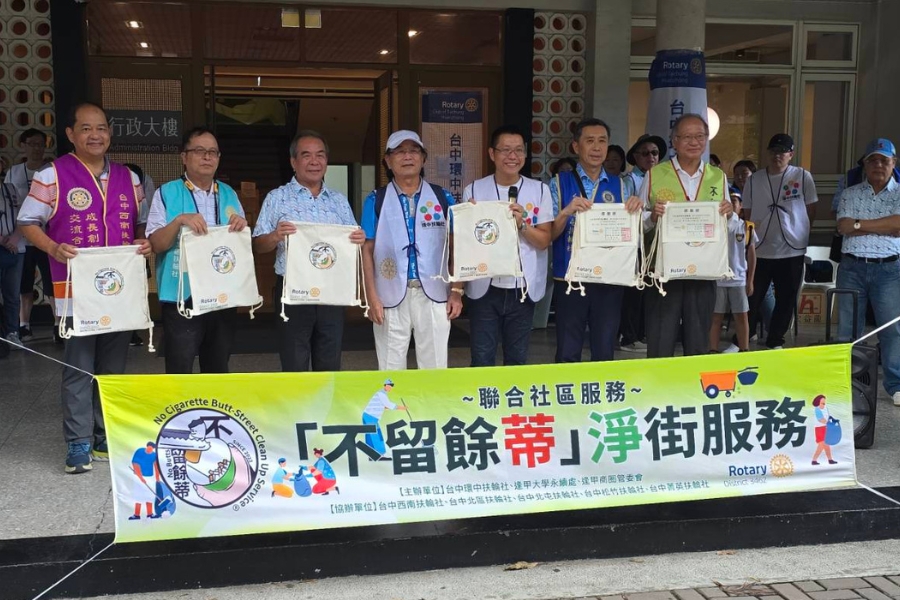
The“Leave No Trace” community clean-up campaign was held on August 16 in the neighborhoods surrounding Feng Chia University.
Globally, trillions of cigarette butts are improperly discarded each year. Most cigarette filters are made of cellulose acetate, a material that decomposes very slowly. After use, the filters may retain nicotine, tar, and other chemical substances. When washed into storm drains and drainage systems by rainwater, these pollutants can eventually enter rivers and oceans, turning a street-cleanliness issue into a broader environmental challenge affecting water quality and marine ecosystems.
Distinguished Professor Chen-Yeon Chu, Dean of Sustainability at Feng Chia University, emphasized that the initiative was not merely a one-time environmental service activity, but the starting point for a long-term sustainability partnership between the University and the local community. The University plans to work with Rotary clubs, community organizations, and related partners to identify cigarette-butt litter hotspots around campus, evaluate the installation of dedicated collection facilities, and combine environmental education with public awareness campaigns to reduce cigarette-butt pollution at its source before it enters roads, drainage systems, and natural environments.
In addition to promoting waste reduction and proper collection, Feng Chia University will further explore technologies for analyzing cigarette-butt composition and removing associated pollutants. The University also plans to evaluate the potential of converting cigarette waste into reusable energy or heat through processes such as hydrolysis, creating new possibilities for resource recovery and environmental sustainability.
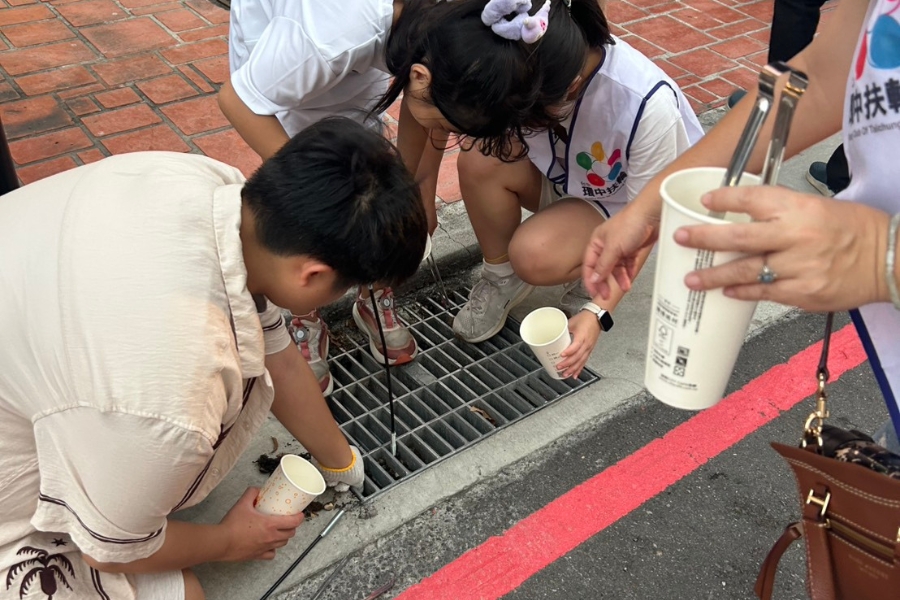
Nearly 100 volunteers combed through hard-to-reach corners of the neighborhood to collect discarded cigarette butts, helping prevent harmful substances from being washed by rainwater into drainage systems and ultimately the ocean.
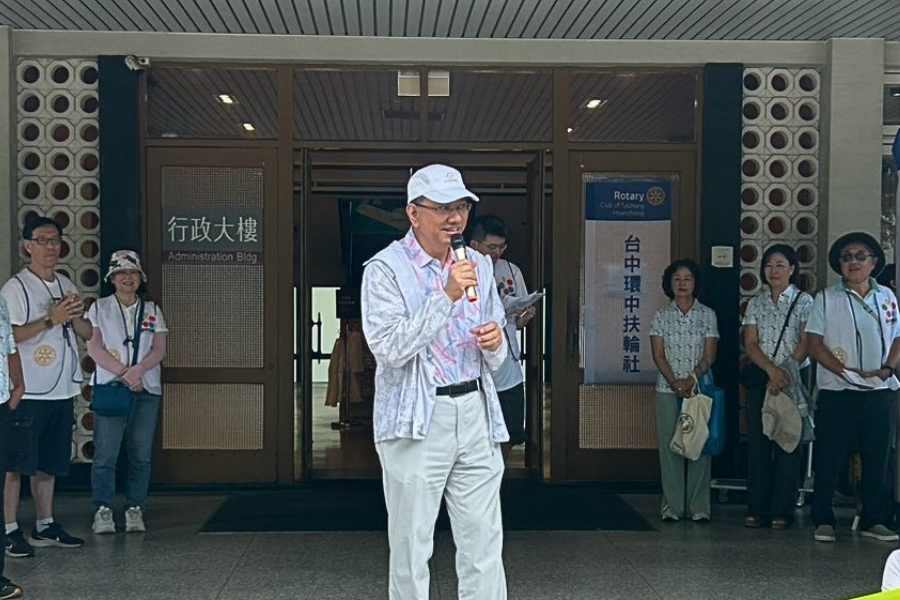
Distinguished Professor Chen-Yeon Chu, Dean of Sustainability at Feng Chia University, noted in his remarks that the initiative is intended to serve as a starting point for building a long-term sustainability partnership among the University, the local community, and Rotary clubs.
Sheng-Chung Wu, Director-General of the Taichung City Environmental Protection Bureau, who participated throughout the event, emphasized that urban environmental quality depends not only on government policies and cleaning efforts but also on active public participation. While cigarette butts may be small in size, they are produced in enormous quantities and can easily enter drainage systems. By combining environmental education, public infrastructure, and behavioral change, communities can effectively reduce pollution at its source. He added that collaboration among universities, Rotary clubs, and local communities can help bring environmental awareness to campuses and younger generations, expanding the social impact of environmental action.
“Starting with a single cigarette butt, we can discuss not only street cleanliness, but also environmental education, resource circularity, and urban sustainability,” said Chen-Yeon Chu. He noted that universities should not only cultivate talent but also apply their research expertise to real-world social challenges. Moving forward, Feng Chia University will continue to use the campus as a foundation and the community as a living laboratory, working alongside government agencies, Rotary clubs, local residents, faculty, and students to advance source reduction of pollution, environmental education, community engagement, and circular economy research, transforming sustainability from an abstract concept into a practical way of life that everyone can participate in.
Share:
Related News