


Share:
Po-Tsang Chen, Associate Professor in the Department of Water Resources Engineering and Conservation at Feng Chia University, was invited to serve as an instructor for the “2026 Disaster Prevention Collaboration Center Training and Annual Evacuation Shelter Operations Workshop” organized by the Wufeng District Office of Taichung City on September 23. Through an integrated curriculum combining disaster intelligence, emergency meal preparation, and shelter management, he guided frontline disaster response personnel from classroom learning to hands-on field exercises.
One of the most memorable parts of the training was the emergency cooking exercise. The rice served to participants during the session was prepared on-site under simulated emergency conditions. Professor Chen emphasized that the essence of disaster cooking is not simply enduring hardship, but ensuring that people can still prepare food and sustain themselves, their families, and displaced residents when resources are limited. The training highlighted practical skills that can strengthen community resilience and improve local disaster preparedness.
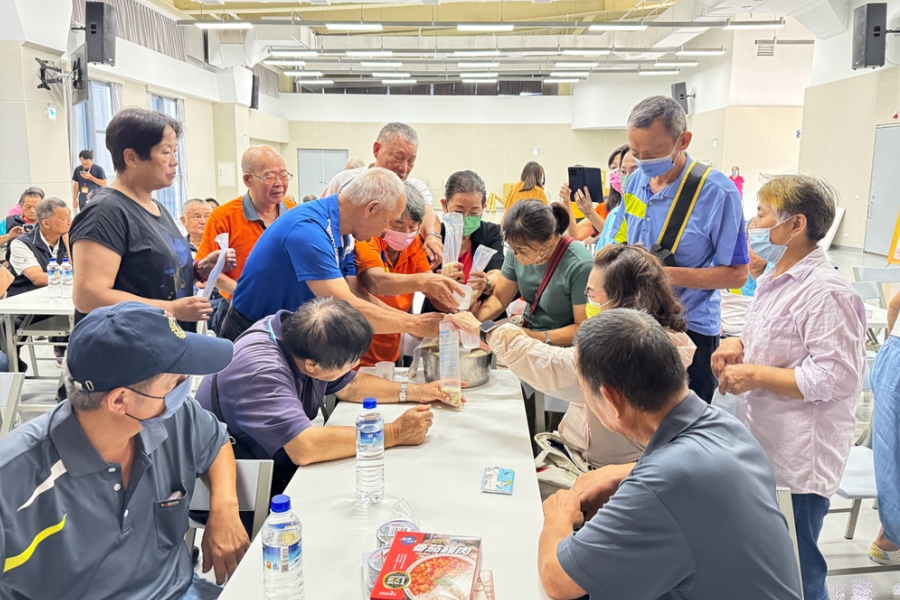
Participants gathered around cooking equipment for a hands-on exercise, learning how to cook rice under emergency conditions with limited resources. The training emphasized practical disaster preparedness skills, demonstrating that even in challenging circumstances, basic meals can still be prepared to support individuals, families, and evacuees during disaster response operations.
The training program also revisited the impact of the 1999 Chi-Chi (921) Earthquake on the Taichung region, examining disaster conditions, emergency response needs, and available resources at the time. Drawing on lessons learned from a large-scale disaster in which public-sector manpower was limited, the course highlighted the importance of preparedness, community mutual aid, and public-private collaboration. Marking the 27th anniversary of the 921 Earthquake, the goal was not simply to remember a disaster, but to transform past experiences into practical preparations for future emergencies. This approach reflects Feng Chia University’s long-term commitment to disaster resilience, from developing disaster prevention tools to providing community-based training.
Beyond emergency care and shelter operations, the ability to accurately communicate disaster information is equally critical to effective response efforts. Po-Tsang Chen introduced the National Science and Technology Center for Disaster Reduction (NCDR) LINE Disaster Reporting Tool and the Taichung City Disaster Information Platform, demonstrating how to report incidents by combining time, location, and on-site photographs. Using examples involving hazard alerts, field observations, shelter population estimates, space allocation, and resource requirements, he showed participants how disaster information can be directly linked to operational decision-making.
Questions such as “What happened?”, “Where did it occur?”, “How many people may need shelter?”, and “Are existing facilities sufficient?” require not only data, but also the ability to interpret and apply that information. Through the training program, participants learned how to turn technology resources into practical tools for frontline disaster response personnel, helping ensure that disaster reporting, resource assessment, and shelter preparation can be effectively connected and coordinated.
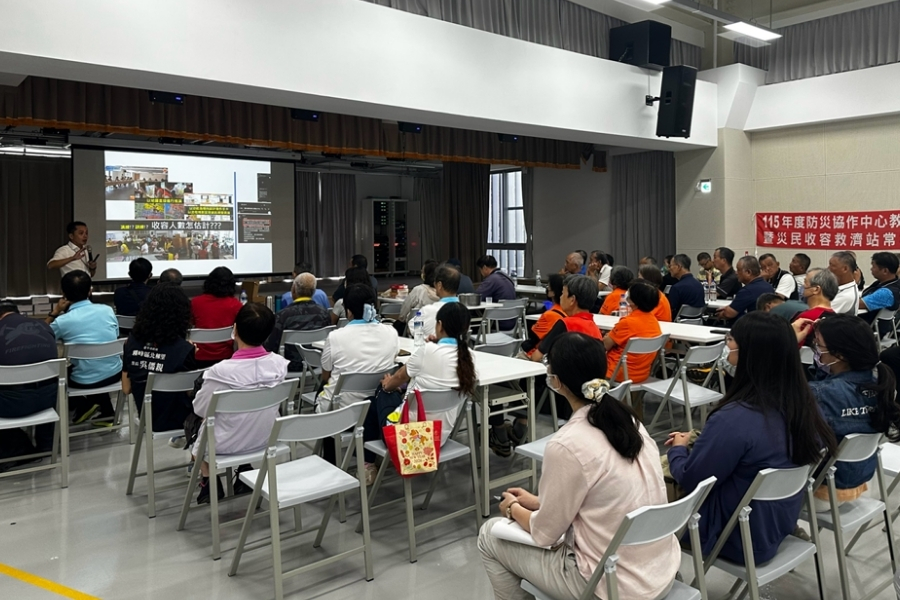
On September 23, the Wufeng District Office of Taichung City held its 2026 Disaster Prevention Collaboration Center Training and Annual Evacuation Shelter Operations Workshop, inviting Po-Tsang Chen, Associate Professor of the Department of Water Resources Engineering and Conservation at Feng Chia University, to serve as an instructor. During the training, he introduced frontline disaster response personnel to disaster information management, situational awareness, and methods for estimating evacuation shelter needs, helping participants understand how disaster data can be translated into practical response and shelter planning decisions.
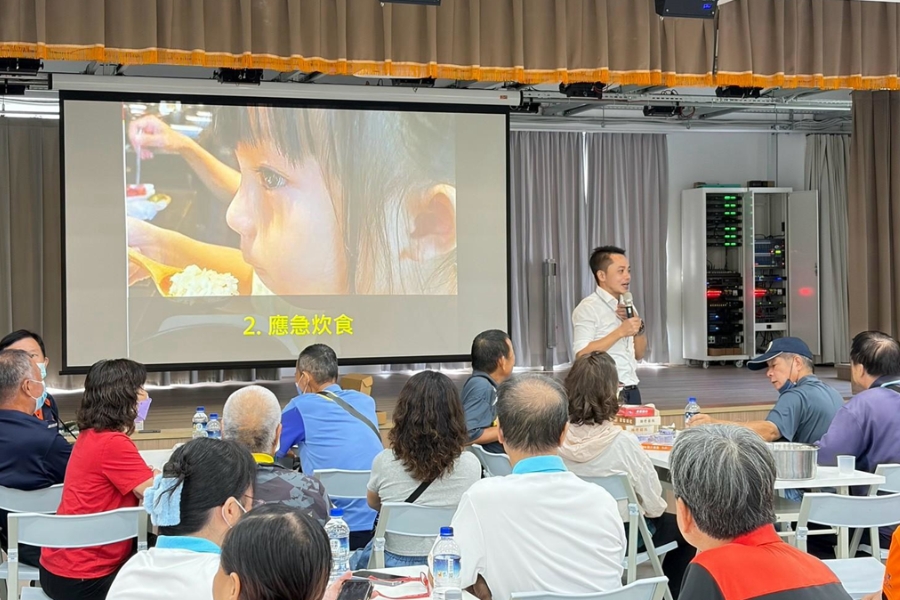
Po-Tsang Chen, Associate Professor of the Department of Water Resources Engineering and Conservation at Feng Chia University, demonstrated emergency meal preparation techniques during the training session, explaining how evacuees can still be provided with a hot meal even when cooking facilities, equipment, and resources are severely limited. He emphasized that the goal of disaster cooking is not merely to endure difficult conditions, but to ensure that people affected by disasters can maintain basic food security and care for themselves, their families, and displaced residents under emergency circumstances.
The shelter operations exercise took place directly in the multi-purpose space of the Wufeng District Office. Po-Tsang Chen guided participants through a step-by-step review of the Evacuation Shelter Setup Kit and shelter supplies, helping them plan registration areas, medical care stations, supply distribution points, and sleeping quarters. The exercise also incorporated functional signage, directional floor markings, and personnel assignments to simulate a complete shelter operation workflow.
While forms, signs, and equipment can be prepared in advance, Professor Chen emphasized that practical implementation must be tested in a real environment. Questions such as where evacuees should go upon arrival, who they can turn to for medical assistance, and how relief supplies will be distributed can only be fully evaluated through on-site exercises to ensure that services function effectively when needed.
From disaster preparedness tool development to community-based training, disaster resilience remains a long-term focus of the Department of Water Resources Engineering and Conservation at Feng Chia University. In 2022, the department partnered with the Japan Disaster Prevention Association to donate evacuation shelter supplies to disaster-resilient communities in Taichung. Donated resources included the portable cardboard bed, temporary partition system, and evacuation shelter setup kit developed by Po-Tsang Chen.
This training in Wufeng extended that effort by bringing together equipment, physical space, and personnel coordination in a realistic exercise. The objective was to ensure that disaster preparedness becomes more than a checklist, transforming it into practical skills that frontline responders can confidently implement. When disaster strikes and people are unable to return home, effective preparedness helps ensure that they not only have a safe place to stay and a meal to eat, but also receive the support and care they need from trained personnel.
Share: