


Share:
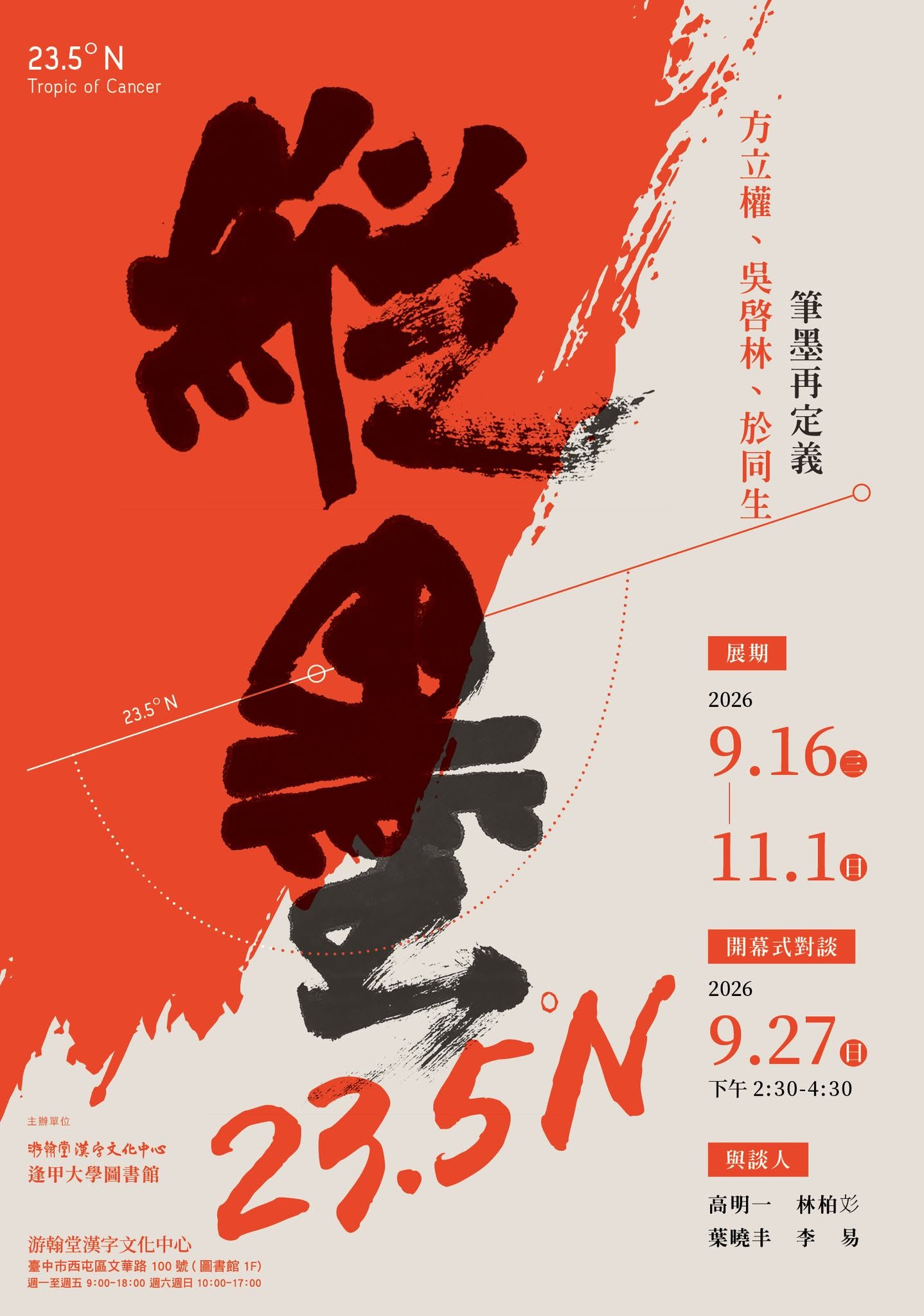
The Han-Tang Center for Chinese Characters at Feng Chia University is presenting the exhibition “Ink Across 23.5°N: Redefining Brush and Ink Through the Works of Fang Li-Quan, Wu Chi-Lin, and Yu Tung-Sheng”, and held an opening forum on September 27. All three participating artists are recipients of the highest honor at Taiwan’s National Fine Arts Exhibition and attended the event in person to engage with visitors in discussions on their works and the art of calligraphy. Together, they demonstrated the strong traditional foundations and contemporary creative vitality of Taiwan’s mid-career generation of calligraphers.
Using 23.5°N, the Tropic of Cancer, as both a geographical and cultural metaphor, the exhibition symbolizes how the three artists are rooted in Taiwan while carrying forward the legacy of Chinese calligraphy. Through their distinctive artistic vocabularies, they explore the diverse possibilities of calligraphy in contemporary society, highlighting Taiwan’s important role in preserving tradition while inspiring innovation.
Moderated by Shih-Chiung Hsiao, Director of the Han-Tang Center for Chinese Characters, the opening forum began with a discussion of artistic training and mentorship. Fang Li-Quan first studied under Li Hsiu-Hua, later received guidance from Shih-Chiung Hsiao, and learned seal carving from Chen Hung-Mien, building a solid foundation in scripts and brushwork through studies of Small Seal Script, Chu manuscripts, and Qin and Han bamboo slips. Yu Tung-Sheng also sought advice from Shih-Chiung Hsiao early in his artistic development before studying under Tu Chung-Kao, whose emphasis on the expressive quality of lines had a profound influence on his work. Wu Chi-Lin, who was taught by Shih-Chiung Hsiao during his years at Taichung First Senior High School, has long embraced the principle of “learning from the past to create for the present” through extensive study of ancient scripts and traditional calligraphy.
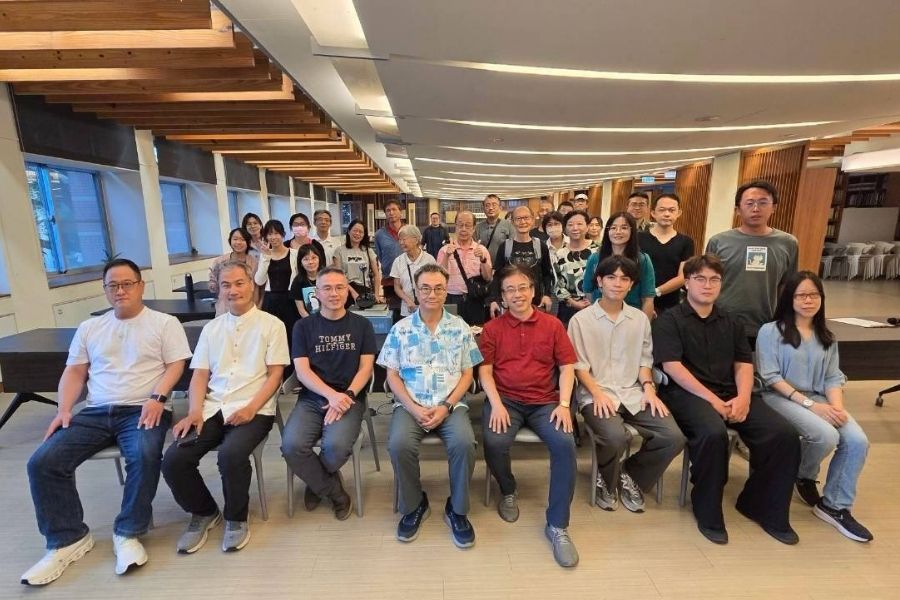
At the opening ceremony of “Ink Across 23.5°N: Redefining Brush and Ink Through the Works of Fang Li-Quan, Wu Chi-Lin, and Yu Tung-Sheng” on September 27, the three featured artists, Fang Li-Quan (left, second from left), Wu Chi-Lin (left, third from left), and Yu Tung-Sheng (left, first from left), attended in person and engaged with visitors i
At the heart of the exhibition is the theme“Redefining Brush and Ink,” highlighting how the three artists pursue distinct creative explorations that bridge tradition and contemporary expression.
Fang Li-Quan draws inspiration from Qin and Han bamboo slips, silk manuscripts, and bronze inscriptions. By enlarging the delicate forms of ancient characters into large-scale exhibition works, he transforms their visual rhythm and expressive force through dynamic brushstrokes, structural reconfiguration, and spatial composition, giving classical scripts new vitality within contemporary exhibition spaces.
Building upon a strong foundation in running script, cursive script, archaic clerical script, and the artistic traditions of Bada Shanren, Yu Tung-Sheng further expands the boundaries of calligraphy beyond Chinese characters through his distinctive approach to English calligraphy. Integrating the fluidity and structural strength of traditional brushwork into the design of Roman letters, while incorporating digital technologies and color spray-print techniques, he enables the spirit of brush and ink to transcend linguistic and material boundaries, opening new possibilities for dialogue between calligraphy and contemporary visual culture.
Wu Chi-Lin shared how his artistic journey evolved from a “competition period” to a “life-oriented period.” Before the age of forty, he focused on technical mastery and precision, integrating Chu scripts, Small Seal Script, and running-cursive styles into award-winning works that earned top honors at major competitions, including the Sun Yat-sen Youth Art Award. After forty, however, he gradually shifted away from the competitive framework and embraced the philosophy that“calligraphy is life.” His work now emphasizes personal experience, humanistic values, and everyday aesthetics, positioning calligraphy not merely as a display of technique but as an artistic practice connected to lived experience.
Discussants Kao Ming-Yi and Lin Po-Wen noted that the works of the three featured artists illustrate the significant role played by Taiwan’s mid-career generation of calligraphers in contemporary art. While continuing the foundations established by earlier masters, they have developed distinctive personal styles and pursued interdisciplinary experimentation, demonstrating the vitality of Taiwanese calligraphy beyond regional and conventional limitations. Through large-scale reinterpretations of ancient scripts, visual experiments that combine calligraphy, language, and digital technology, and efforts to move calligraphy from competitive arenas into everyday life and popular culture, the three artists offer diverse responses to the changing contemporary art environment and open new possibilities for the future development of Taiwanese calligraphy.
The Han-Tang Center for Chinese Characters at Feng Chia University stated that the exhibition aims not only to showcase the artistic achievements of the three calligraphers but also to reveal how Taiwan’s calligraphy continues to evolve through the interaction of generational inheritance and contemporary innovation. Through exhibitions and public dialogue, the center hopes to help audiences rediscover and experience traditional brush-and-ink culture in contemporary contexts, broaden the cultural horizons of calligraphy, and inject new energy into its future development.
Ink Across 23.5°N: Redefining Brush and Ink Through the Works of Fang Li-Quan, Wu Chi-Lin, and Yu Tung-Sheng Exhibition Dates: September 16 – November 1, 2026 Venue: Han-Tang Center for Chinese Characters, Feng Chia University
Share:
Related News