


Share:
How did Taiwan’s semiconductor industry grow from virtually nothing into one of the world’s most important technological powerhouses?
On March 23, Feng Chia University’s Humanities and Technology Lecture Series welcomed a distinguished speaker: Chin-Tay Shih, former President of the Industrial Technology Research Institute (ITRI) and one of the key figures behind Taiwan’s semiconductor success story. In his lecture, “A Remarkable Journey of a Thousand Miles: Taiwan’s Semiconductor Industry from 0 to 1,” Shih unveiled the extraordinary story behind the creation of Taiwan’s world-leading semiconductor ecosystem.
To help students better understand this historic transformation, the university organized a special screening of the documentary A Chip Odyssey prior to the lecture. More than 200 faculty members and students attended the event. Through the combination of documentary storytelling and direct dialogue with one of the industry’s pioneers, participants were able to revisit the remarkable journey that transformed Taiwan into a global semiconductor leader over the past half-century.

Prior to Chin-Tay Shih’s lecture, Feng Chia University hosted a campus screening of the documentary A Chip Odyssey at Birthday Hall.
Drawing inspiration from the book Chip War, Shih noted that amid growing geopolitical competition between the United States and China, Taiwan’s semiconductor industry has evolved from a relatively obscure sector into a cornerstone of global economic and political stability.
He pointed to major international investments—including TSMC’s expansion in the United States, encompassing three wafer fabrication plants, two advanced packaging facilities, and one research center with a total investment of US$165 billion—as evidence that semiconductors have become a critical component of national security worldwide.
How, then, did Taiwan accomplish this transformation?
Shih summarized Taiwan’s success through three key pillars:
Visionary Industrial Policy
The government invested heavily in talent development and technological research during the industry’s formative years. Public investment funds also played a venture-capital role, supporting innovation and industrial growth. In addition, TSMC’s pioneering pure-play foundry model fundamentally reshaped the global semiconductor ecosystem and enabled the rise of countless world-class IC design companies.
Flexible Industrial Structure
Taiwan’s economy, built largely upon small and medium-sized enterprises, developed an exceptionally agile and innovative industrial network. Through strategic partnerships and a commitment to manufacturing services, Taiwanese companies earned the trust of global customers while creating shared value across the supply chain.
Seizing the Opportunity of Moore’s Law
As transistor density continued to double approximately every two years, Taiwan successfully capitalized on the revolutionary separation of chip design and manufacturing. This strategic positioning allowed the nation to establish leadership in advanced semiconductor production.
Reflecting on the 1970s, Shih recalled a period marked by Taiwan’s withdrawal from the United Nations and two major oil crises. Amid such uncertainty, he argued, a strong sense of urgency and determination emerged.
He paid tribute to visionary leaders such as Sun Yun-Suan and overseas Taiwanese experts including Wen-Yuan Pan, who dedicated themselves to securing Taiwan’s future. Shih highlighted Pan’s selfless principles while organizing technical advisory committees: refusing compensation, avoiding the use of company time, and strictly honoring confidentiality agreements. This profound sense of mission, he explained, became one of the driving forces behind Taiwan’s technological rise.
Toward the end of the lecture, Shih returned to the theme of A Chip Odyssey, emphasizing the importance of passing this collective achievement to future generations.
He reflected that although Taiwan lacks abundant natural resources and frequently faces challenges such as typhoons and earthquakes, it possesses its most valuable asset: talent.
Looking ahead to the AI era, Shih noted that semiconductors are no longer confined to a single discipline. Instead, they now require expertise spanning chemistry, optics, advanced equipment, and many other specialized fields. As a result, future challenges will become increasingly complex and interdisciplinary.
He encouraged students to maintain a sense of urgency, continue investing in talent development and innovation, and remain committed to lifelong learning.
Finally, Shih emphasized that the enduring foundation of Taiwan’s semiconductor success lies in integrity and sharing. He expressed hope that academia and industry would continue embracing collaborative partnerships rather than exclusive competition, building deep trust with global customers and jointly creating the next chapter of technological innovation.
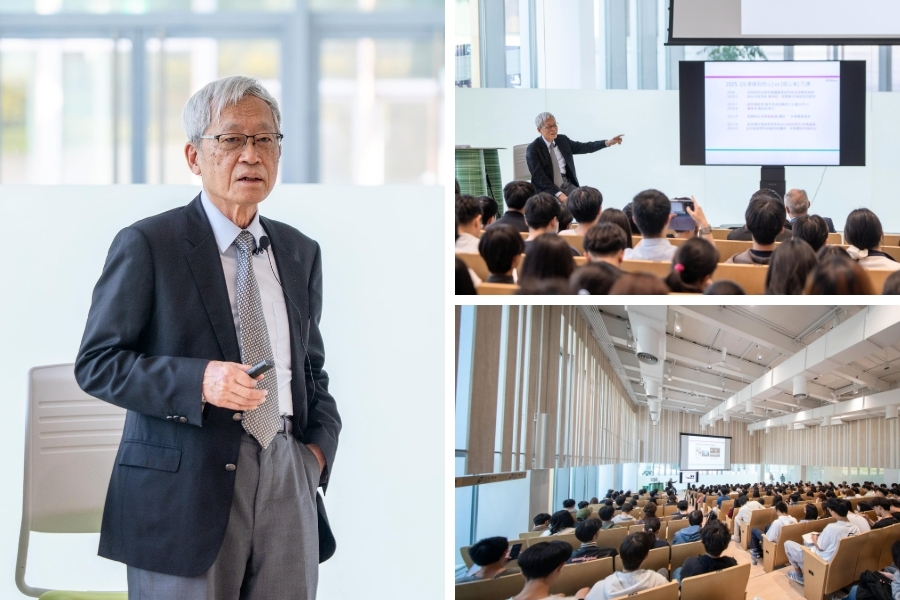
Former ITRI President Chin-Tay Shih delivered a lecture titled “A Remarkable Journey of a Thousand Miles: Taiwan’s Semiconductor Industry from 0 to 1,” sharing the inspiring story behind Taiwan’s semiconductor development with faculty members and students.
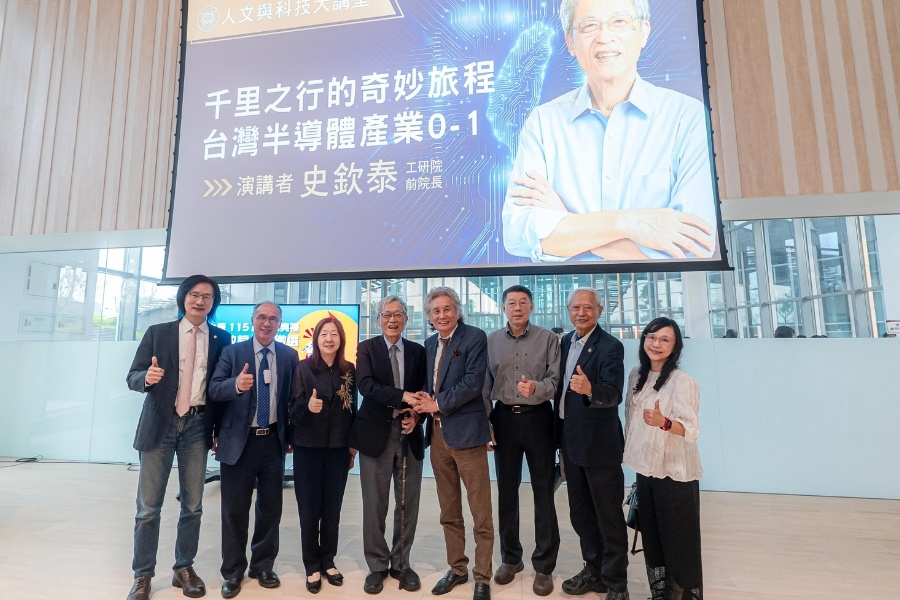
Invited by Ken-Yi Liang, Distinguished Spring Rain Chair Professor at Feng Chia University, former ITRI President Chin-Tay Shih (fourth from left) visited the university to share his insights. Distinguished guests including Cheng-Shu Kao (fourth from right), Chairman of Feng Chia University; President Vey Wang (third from left); and Mao-Sheng Liang (second from right), Chairman of Gallant Precision Machining Co., Ltd., attended the lecture and joined a commemorative group photo afterward
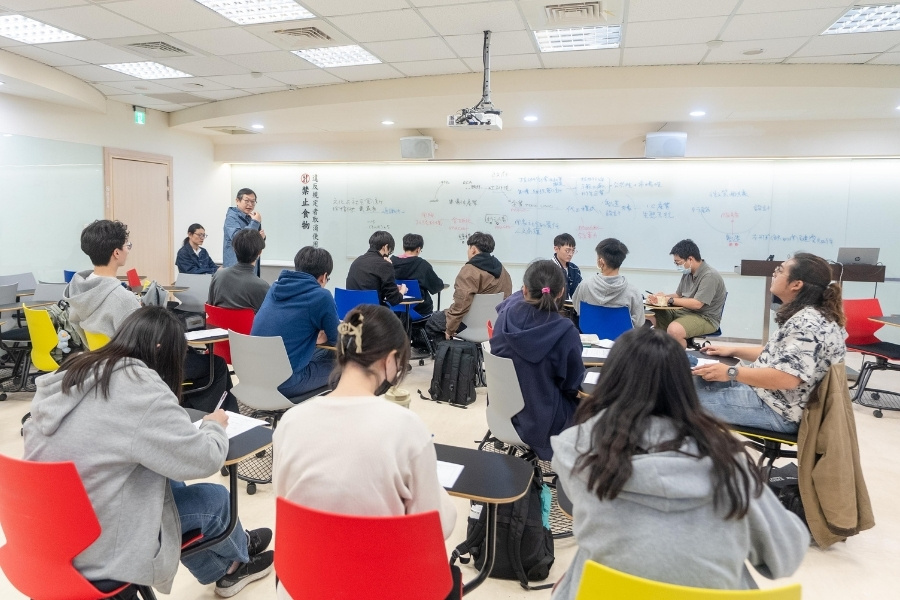
The Humanities and Technology Lecture Series integrates general education and self-directed learning. Following the lecture, instructors guided students through reflection and discussion activities, helping them transform expert insights into meaningful personal learning experiences.
Share:
Related News