


Share:
On March 18, Feng Chia University hosted the Second Working Meeting and Site Visit of the 2025 Smart Manufacturing Talent Development Program, bringing together representatives from Taiwan’s Ministry of Education and faculty members from mechanical engineering–related departments at 14 universities nationwide.
Through project presentations, discussion sessions, and facility tours, the event highlighted the program’s achievements in smart manufacturing talent development and demonstrated the strength of inter-university collaboration. It also showcased the university’s integrated capabilities in innovative education and social engagement.
In his opening remarks, President Vey Wang emphasized that talent is at the heart of smart manufacturing development. He noted that only by integrating educational innovation with industry practice can universities cultivate future engineers equipped with immediate workplace readiness. He also encouraged participating institutions to continue advancing teaching transformation, interdisciplinary integration, and industry-academia collaboration to further enhance the quality of talent cultivation.
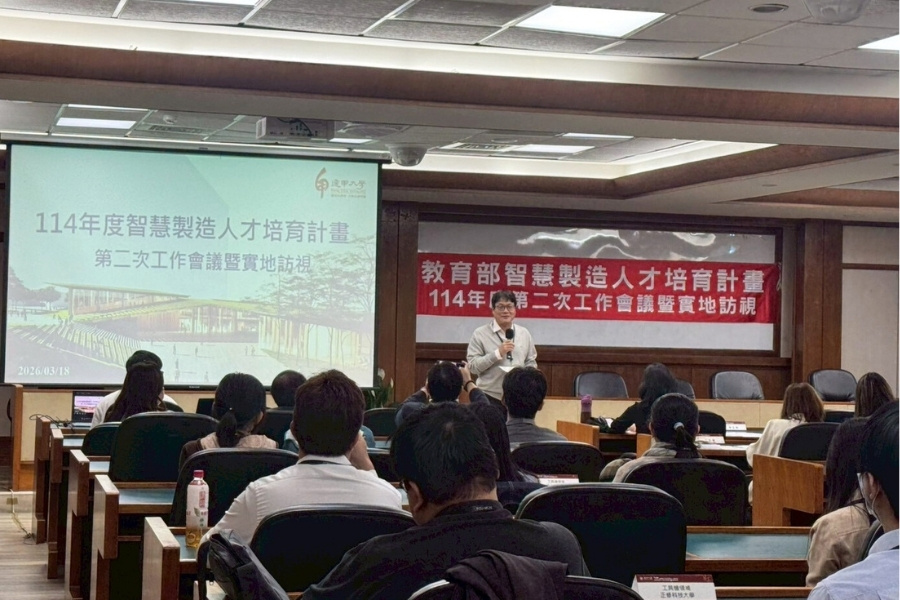
Representatives from the Ministry of Education and faculty members from mechanical engineering–related departments at 14 universities gathered at Feng Chia University for the Second Working Meeting and Site Visit of the 2025 Smart Manufacturing Talent Development Program.
The event agenda featured project briefings, facility tours, technology demonstrations, and thematic presentations. Faculty members and project teams from 14 universities, including National Taiwan University, National Cheng Kung University, and National Central University, participated in the exchange.
Discussions focused on three major areas of smart manufacturing development:
RoboticsMachine ToolsSemiconductor and Electronic Equipment
As part of the site visit, participants toured several of Feng Chia University’s smart manufacturing education and practice facilities, including:
The Intelligent Machinery Corridor in the College of Engineering and ScienceThe newly completed Smart Robotics Teaching and Application CenterROSOCoop, the robotic construction and fabrication facility of the School of Architecture
Guests also visited the Connected Enterprise Laboratory and Smart Manufacturing Laboratory, both established in collaboration with Rockwell Automation, which demonstrated how advanced industrial technologies are incorporated into classroom teaching and hands-on training.
Led by Dean Chi-Chang Wang of the College of Engineering and Science, the tour included detailed presentations by faculty members Hsin-Shu Peng, Chiu-Hung Chen, Wu-Chang Kuo, and Yu-Kun Lin from the Department of Mechanical and Computer-Aided Engineering, together with Professor Yu-Ting Sheng from the School of Architecture. Their explanations of facility features, educational applications, and industry-academia integration models received high praise from visiting evaluators.
According to Kuo-Cheng Tai, Chair of the Department of Mechanical and Computer-Aided Engineering, the program emphasizes both learning by doing and site-oriented learning. By creating a comprehensive smart manufacturing environment, students are able to develop critical technical competencies in settings closely aligned with industrial practice while strengthening interdisciplinary integration skills needed by emerging industries.
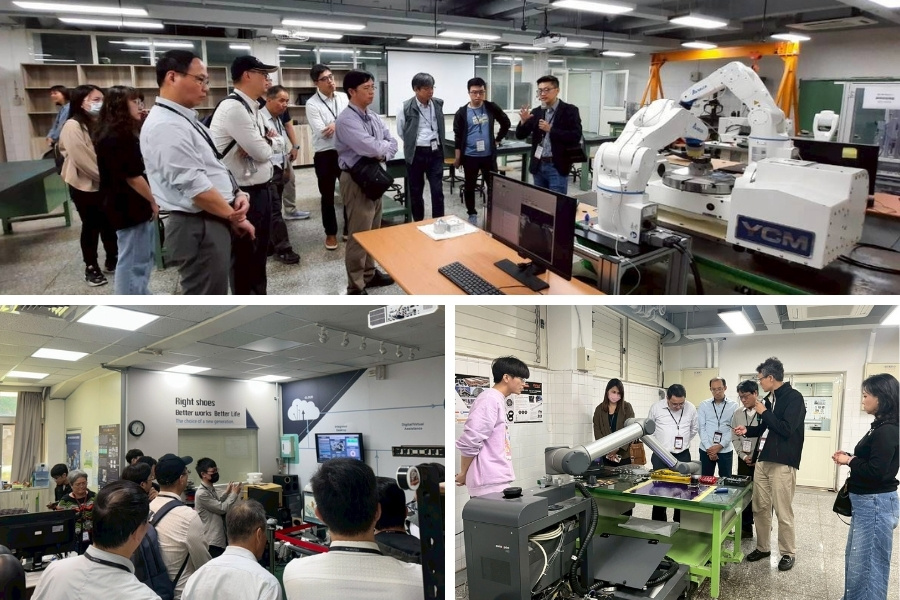
During the site visit, Feng Chia University faculty members and students introduced facility features, teaching applications, and industry-academia collaboration models, earning enthusiastic recognition from participating evaluators.
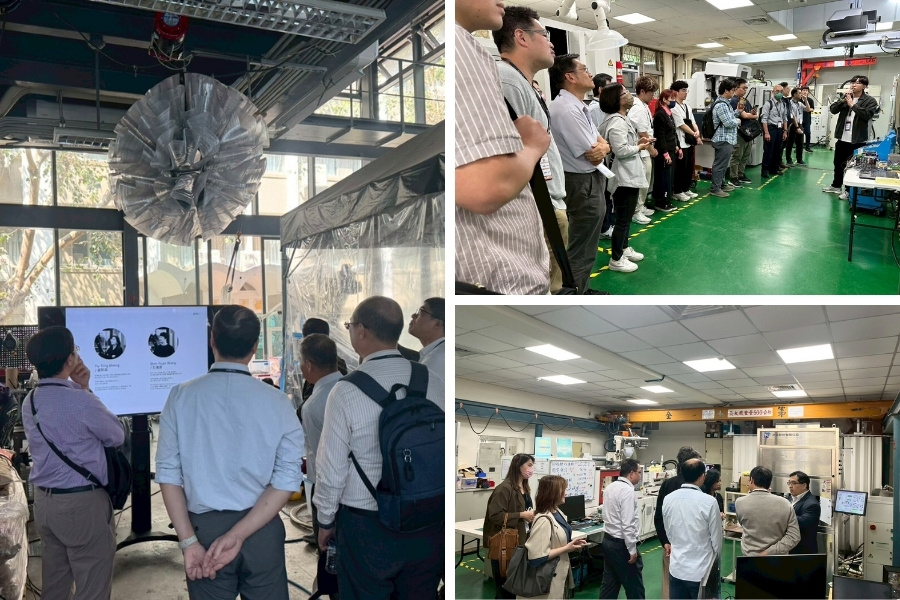
Guests toured a variety of smart manufacturing teaching and practice facilities at Feng Chia University, gaining first-hand insight into the university’s innovative educational environment.
The event also featured invited talks by Professor Chien-Sheng Liu, Chair of the Department of Mechanical Engineering at National Cheng Kung University, and Professor Chung-Hsien Kuo, Distinguished Professor in the Department of Mechanical Engineering at National Taiwan University.
Their presentations focused on Problem-Based Learning (PBL) approaches in semiconductor equipment and robotics education, fostering greater collaboration, resource sharing, and academic exchange among participating institutions.
In addition, with support from the Smart Manufacturing Talent Development Program, the Department of Mechanical and Computer-Aided Engineering and the Office of Technology Development jointly organized the 2026 Feng Chia University Co-Good Innovation Competition – New Technologies, New Futures. The competition focuses on robotics development and applications, encouraging students to create socially responsive intelligent automation solutions through interdisciplinary collaboration while cultivating both technical expertise and social responsibility.
The event concluded with a tour of Gongshan Hall, where participants gained deeper insight into how Feng Chia University integrates smart manufacturing, interdisciplinary learning, and industry collaboration to create educational environments that emphasize both innovation and social impact.
Looking ahead, the university will continue advancing related initiatives, integrating resources and innovative teaching models to cultivate professionals who meet industry needs while generating positive social value. Through these efforts, Feng Chia University aims to further strengthen its role as a leading promoter of smart manufacturing education in Taiwan.
Share:
Related News