


Share:
As Taiwan enters a super-aged society, housing safety for older adults has become an increasingly urgent concern. Commissioned by the Taichung City Architecture and Cultural Education Foundation, the School of Architecture at Feng Chia University conducted the project Aging in Place: Strategies for Improving the Environmental Quality of Aging Homes. On August 12, the project team presented its first-phase interdisciplinary research findings at the symposium Housing Solutions in an Aging Society: Practical Approaches to Aging Home Improvements and Policy Resources, held at the Jen-Ai Hospital Station Front Building in Taipei. The results, based on 348 home environment surveys, revealed that as many as 70 percent of older adults living in high-risk aging homes lack awareness of preventive home maintenance.
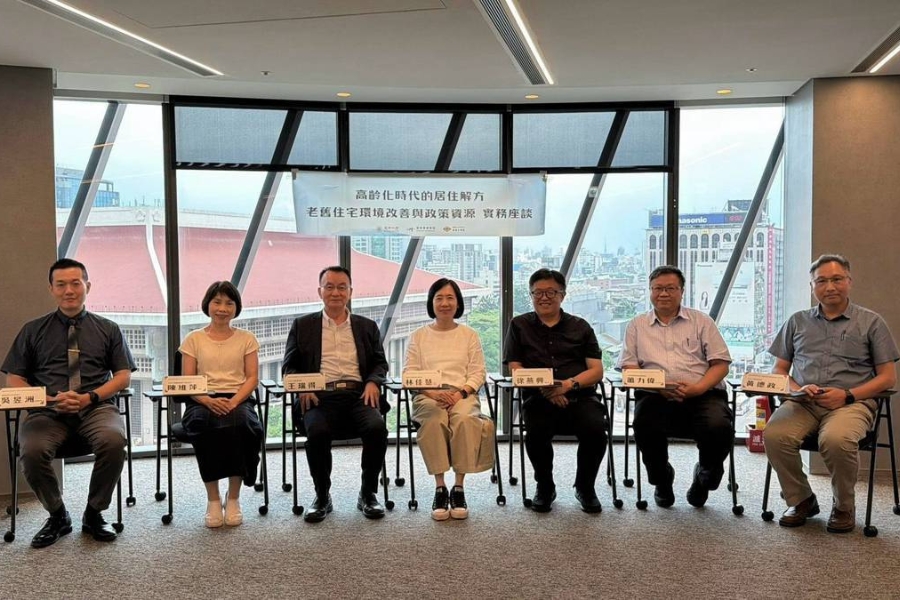
Representatives from industry, government, academia, and healthcare joined the research team from the School of Architecture at Feng Chia University for the symposium Housing Solutions in an Aging Society.
Led by Professor Chia-Hui Lin, the research team conducted 348 household environment surveys in communities, including 152 residences more than 31 years old. The findings revealed that 73.03% of these aging homes were walk-up apartments without elevators, while 51.32% of bathrooms contained floor-level differences at entrances, significantly increasing the risk of falls and disability among older adults. Further analysis showed that 70.4% of seniors living in high-risk housing environments lacked awareness of preventive home improvements because they had “become accustomed” to their living conditions, creating a dual challenge of high environmental risk and low risk perception.
Professor Chia-Hui Lin emphasized that collecting data alone is not enough to bring about meaningful change. The team’s goal is to move beyond documenting existing conditions toward developing practical improvement strategies. Through preventive home environment modifications, the project seeks to delay the effects of aging and enable older adults to enjoy safe and dignified living spaces before the onset of disability.
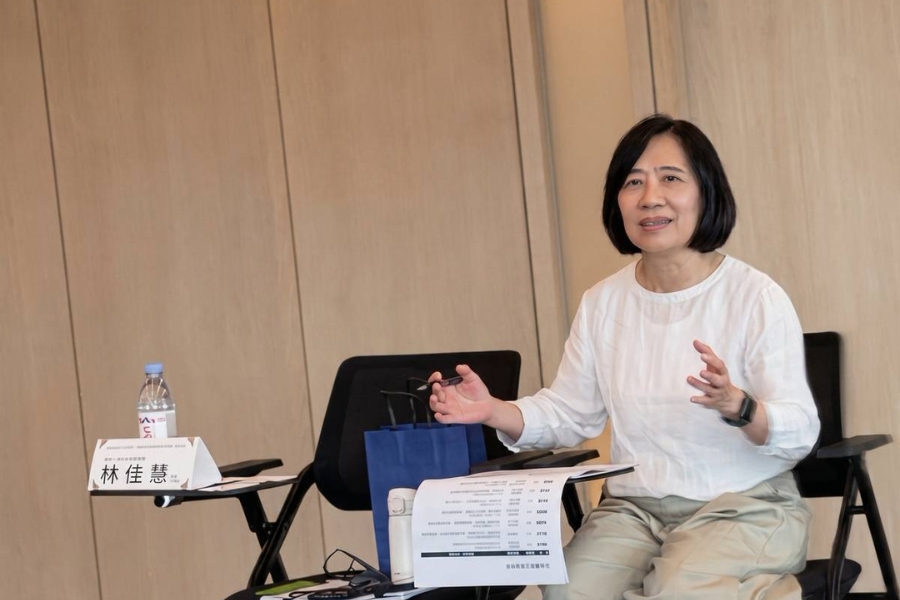
《Aging in Place》 project principal investigator Chia-Hui Lin of the School of Architecture at Feng Chia University presented the first-phase survey findings of the research project
The symposium brought together representatives from the National Land Management Agency, Ministry of the Interior, the Architecture and Building Research Institute, Ministry of the Interior, and the Railway Bureau, Ministry of Transportation and Communications for practical discussions. Representatives from the Architecture and Building Research Institute noted that housing issues in an aging society require systematic solutions that connect front-end needs assessments, midstream social welfare and healthcare services, and back-end housing engineering, thereby promoting cross-ministerial resource integration.
Beyond regulations and policy frameworks, infrastructure and family communication were identified as critical factors in renovating aging homes. Wei-Ping Chen, Director of the Jenji Home for the Elderly, emphasized that future smart care services will depend on reliable digital connectivity, making Wi-Fi networks and supporting electrical infrastructure essential components of home improvement projects. Meanwhile, Yu-Chou Wu, Assistant Professor at Chaoyang University of Technology, pointed out that in practice, home renovation efforts are often hindered by older adults’ emotional attachment to their homes and communication barriers among family members.
Shu-Ting Lai, Vice President of Feng Chia University and Dean of the School of Architecture, stated that the consensus reached through the symposium will serve as an important foundation for revising the Practical Handbook for Improving Aging Home Environments and developing policy recommendations for preventive home renovation. The team hopes the handbook will help government agencies optimize long-term care and urban renewal policies while lowering barriers for the interior design and renovation industry to adopt age-friendly design principles, thereby strengthening the impact of University Social Responsibility (USR) initiatives and cross-sector collaboration.
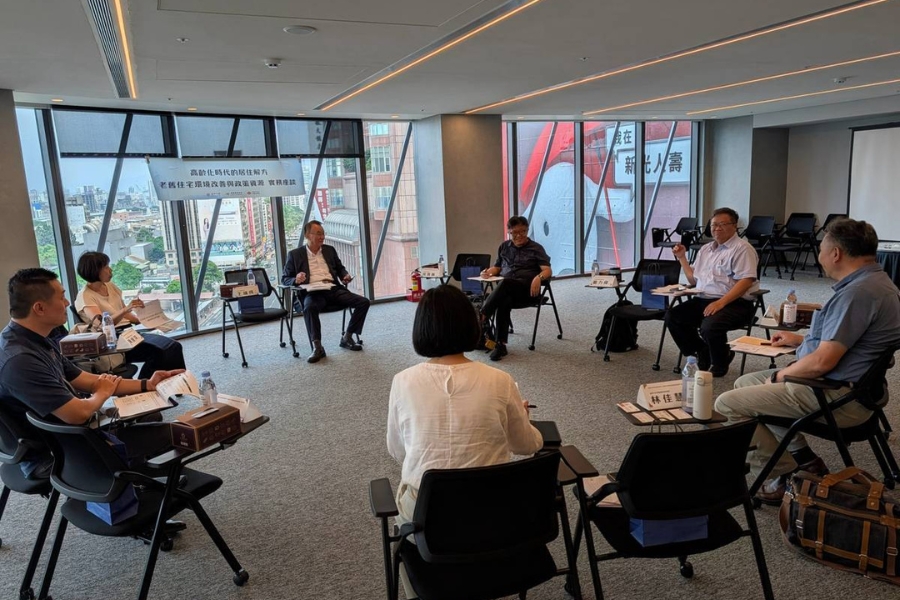
The symposium brought together experts from multiple sectors to engage in in-depth discussions on practical issues including regulatory coordination, the integration of smart technologies, and the renovation of aging homes. Their exchanges highlighted the importance of interdisciplinary collaboration in developing effective housing solutions for an aging society.
Share:
Related News