


Share:
The 13th Taiwan International Ethnographic Film Festival (TIEFF) 2026, themed Post/Industrial Myths, focused on cultural memory and social issues arising from industrial transformation and toured venues across Taiwan from April to June. At Feng Chia University, the event was jointly organized by the Center for Austronesian and Cultural Sustainability Studies, the Library, and the Indigenous Student Resource Center, featuring three film screenings on May 14, 19, and 25, followed by discussions with filmmakers and scholars.
I Am the River, the River Is Me: Reimagining the Relationship Between People and Nature
The first screening, held on May 14, featured I Am the River, the River Is Me, directed by Canadian filmmaker Petr Lom. The documentary tells the story of New Zealand’s Whanganui River—the first river in the world to be granted legal personhood—and highlights the profound connection between the Māori people and the river. Through the Māori proverb, “I am the river, and the river is me,” the film illustrates a worldview in which humans and nature coexist as one.
Following the screening, Yu-Ping Chen, Associate Professor of the Master's Program in Cultural and Social Innovation, and Chen-Chia Huang, Associate Professor of the Department of Water Resources Engineering and Conservation, discussed the interconnected relationship between rivers and culture. Drawing on examples from Taiwan’s river management and flood-control projects, Huang further examined contemporary challenges in balancing ecological sustainability with river governance. Hao Wang, Dean of the College of Social Innovation, also attended and shared insights from his field research experiences in Palawan, the Philippines, sparking dialogue on social innovation and humanistic perspectives.
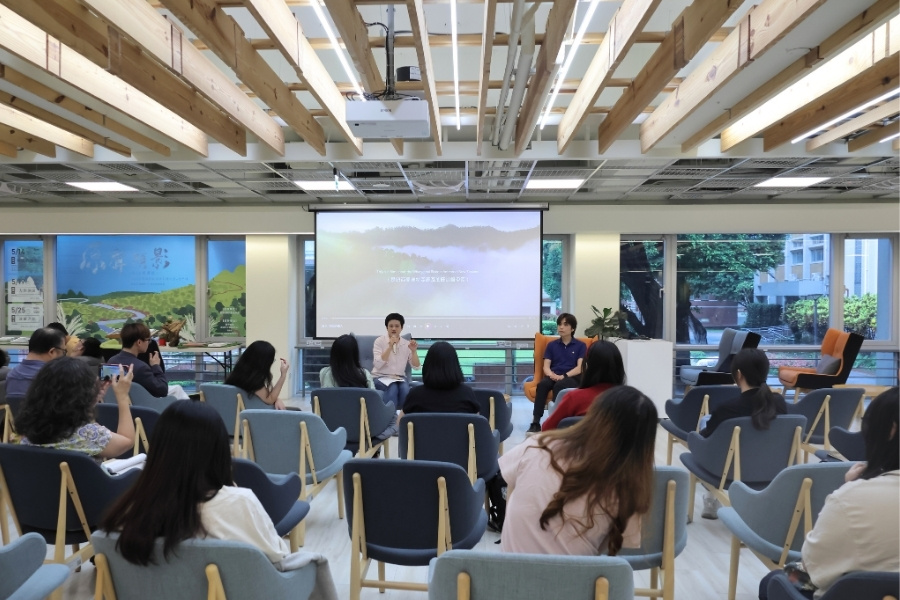
Chen-Chia Huang, Associate Professor of the Department of Water Resources Engineering and Conservation, and Yu-Ping Chen, Associate Professor of the Master's Program in Cultural and Social Innovation, share their perspectives during the post-screening discussion.
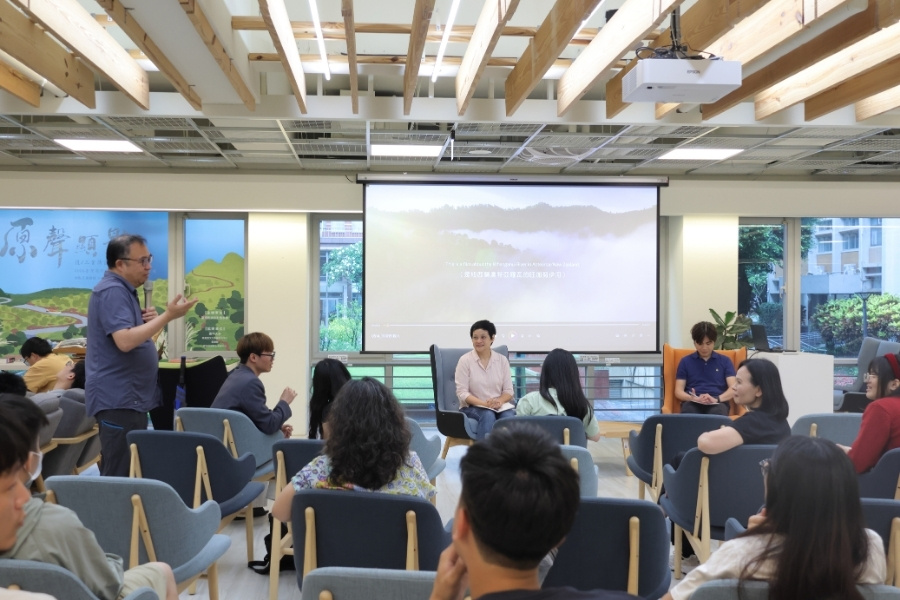
Hao Wang, Dean of the College of Social Innovation, attends the screening and shares insights from his fieldwork experiences in Palawan, the Philippines.
Dabao: Return: Tracing a Century of Indigenous Memory
On May 19, audiences viewed Dabao: Return, directed by Tseng Yu-Ping. Through the reconstruction of family memories, the documentary revisits the Atayal resistance in the Dabao community during the Japanese colonial period and seeks to recover stories that had remained untold for generations. As community members retrace the past, the film also reveals how the silence surrounding the conflict continued to affect descendants long after the event itself, offering thought-provoking reflections on historical trauma and collective memory.
Director Tseng attended the post-screening discussion and guided participants in exploring Indigenous transitional justice through the lens of family history. His documentary Embers Reignited, another installment in the Centennial Indigenous Grief trilogy produced by the Indigenous Peoples Cultural Foundation, also documents the history of the Dabao resistance.
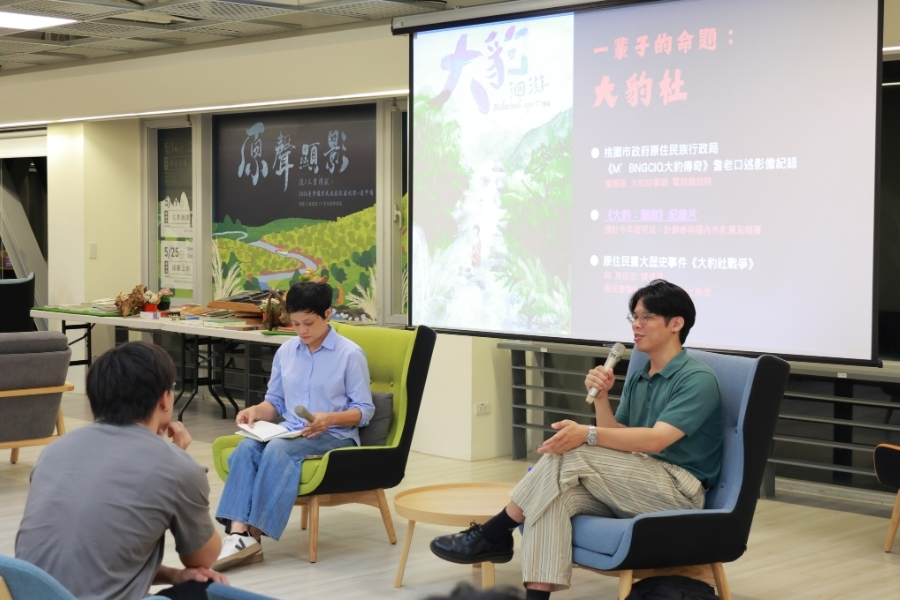
Director Tseng Yu-Ping discusses Indigenous transitional justice through the lens of family history following the screening of Dabao: Return. His documentary Embers Reignited is also part of the Centennial Indigenous Grief trilogy produced by the Indigenous Peoples Cultural Foundation.
Shore of Displacement: Reconstructing History Through Oral Testimony and Archaeology
The final screening on May 25 featured Shore of Displacement, one of the three films in the Centennial Indigenous Grief trilogy jointly produced by Taiwan’s Council of Indigenous Peoples and the Indigenous Peoples Cultural Foundation over a three-year period. Centered on the 1877 Cepo' Incident of the Amis people, the documentary pieces together historical events through oral histories from tribal elders, documentary records, and archaeological evidence. By examining the choices made by historical figures in the face of external upheaval, the film offers viewers a vivid understanding of Taiwan during the Qing era.
Director Lega Shumi joined the discussion virtually and shared the process of gradually uncovering historical truths through interviews with tribal elders. He also discussed the dilemma Indigenous communities face regarding archaeological excavations—whether to excavate or leave sites untouched, both decisions reflecting contemporary perspectives and values toward history and cultural heritage.
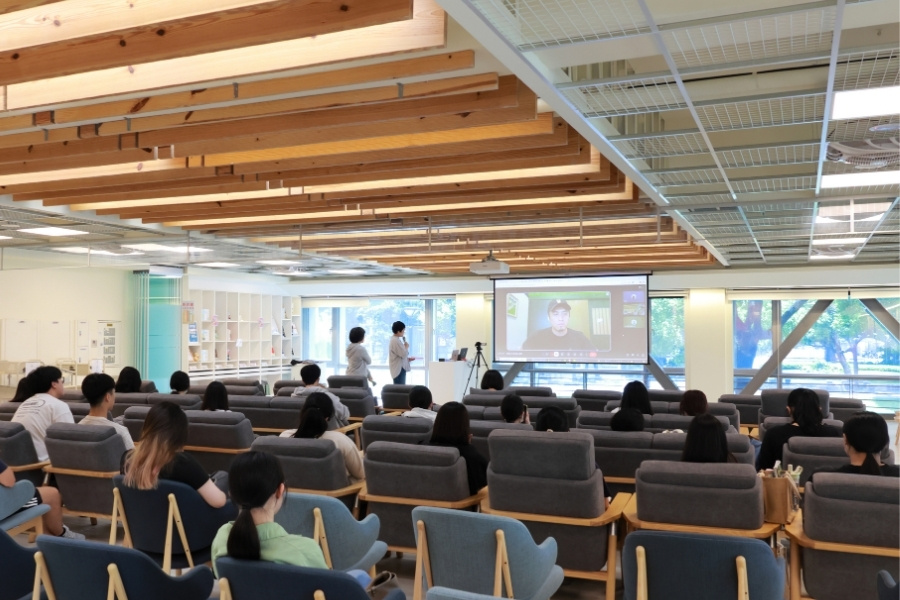
Director Lega Shumi joins virtually following the screening of Shore of Displacement, sharing how oral histories from tribal elders helped gradually uncover the historical truth surrounding the 1877 Cepo' Incident.
Through these three films and the accompanying discussions, the festival encouraged audiences to engage with Indigenous history, cultural memory, and issues of transitional justice from diverse perspectives. The program invited reflection on the profound relationships connecting people, land, ethnicity, and history.
In conjunction with the film series, the Library also hosted the Voices Revealed: Indigenous Literature Book Exhibition, featuring selected works related to Austronesian languages and Taiwan’s Indigenous peoples.
Share:
Related News