


Share:
Feng Chia University's School of Architecture hosted the 2026 International Housing in Asia Workshop (IHAW), a 13-day program of intensive design work and academic exchange held from August 8 to August 20. This year's workshop, themed "Redefining Asian Metropolis Housing: From Seismic Resilience to Stress-Free Living," focused on high-density, high-value urban innovation districts, examining how integrating commercial functions into mixed residential-commercial development can sustain livable density at the neighborhood level.
The workshop brought together faculty and students from eight universities across four countries: King Mongkut's Institute of Technology Ladkrabang and Chiang Mai University in Thailand; Kindai University, Saga University, and Japan Women's University in Japan; TU Wien (Vienna University of Technology) in Austria; and Tamkang University and Feng Chia University in Taiwan.
On the opening day, internationally renowned architect Kengo Kuma delivered a keynote lecture in the Multi-Function Hall of Virtuosi Hall — a building Kuma himself designed for Feng Chia University — giving the visiting students and faculty a firsthand encounter with his architectural philosophy. C Sun Manufacturing Group Chief Executive Officer Yu-Wen Liang, whose company served as a lead sponsor, also led a delegation to the opening ceremony and later gave a talk on the company's development and core technologies, offering the international participants insight into Taiwan's industry practices.
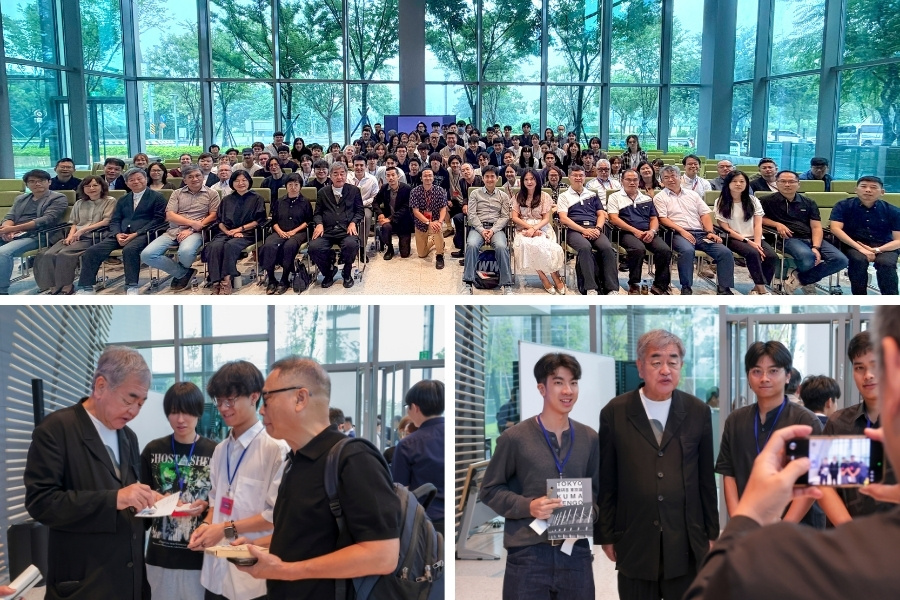
The 2026 International Housing in Asia Workshop opened at Feng Chia University, with renowned Japanese architect Kengo Kuma delivering the opening-day keynote lecture.
To deepen the dialogue between theory and practice, the workshop featured a series of professional lectures, workshops, and site visits. Participants toured Ruentex Engineering & Construction's precast plant in Yangmei, where technical lectures introduced them to advanced construction technologies on the factory floor, and visited the Taichung Green Museumbrary for an on-site study of its spatial design and structure. The lecture series brought in three noted Taiwanese architecture practices — Ming-Hung Wang Architects, architect Yu-Tse Dai, and Bio-Architecture Formosana — along with professional engineer Chia-Hua Liu and the ROSO Robotic Construction Lab, who spoke on practical and technical topics. Architect Hsuan-Mu Huang led an AI design workshop that introduced students to applying emerging computational technologies in architectural design.
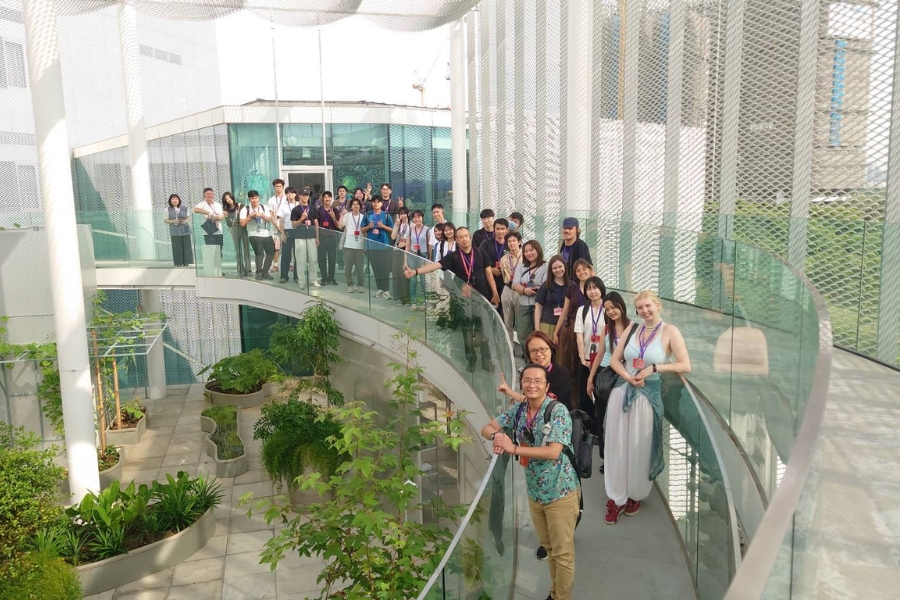
Faculty and students from eight universities in Taiwan, Japan, Thailand, and Austria visited the Taichung Green Museumbrary to study its spatial design and structure firsthand.
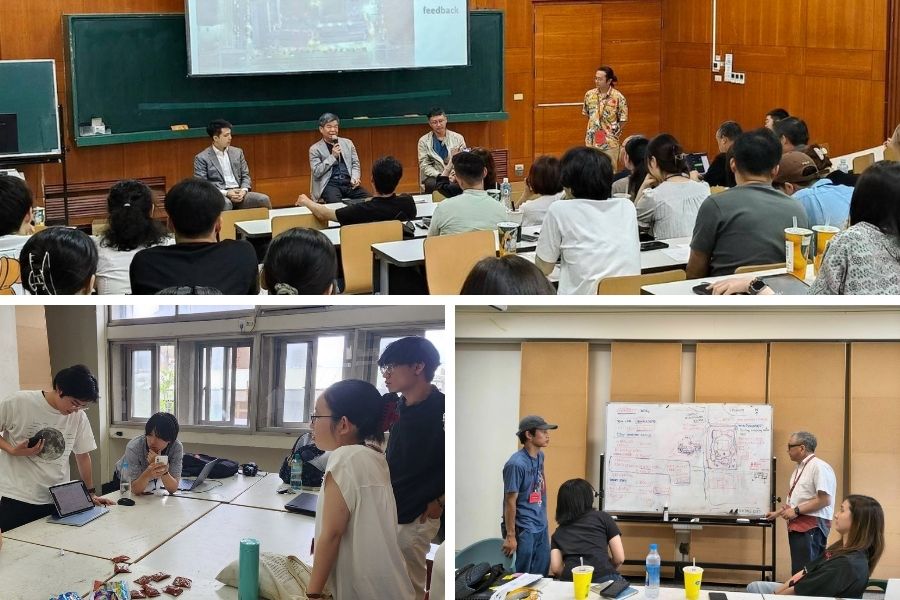
The workshop featured multiple professional lectures and an AI design workshop introducing students to emerging computational technologies in architectural design. (Pictured left to right: architects Hsin-Po Wang, Yu-Tse Dai, and Ping-Wei Kuo.)
At the final review and international symposium held on August 20, Japan Women's University President Satoko Shinohara joined Feng Chia University Vice President and Dean of the School of Architecture Shwu-Ting Lee, along with faculty teams from Chiang Mai University and TU Wien, for a discussion of the workshop's themes spanning both practice and academic research.
By bringing together resources from industry, government, and academia — combining expert lectures, hands-on site visits, and intensive design work — the International Housing in Asia Workshop gave young architecture students from around the world a platform for professional exchange, while showcasing Feng Chia University's growing capacity for international education and cross-sector collaboration.
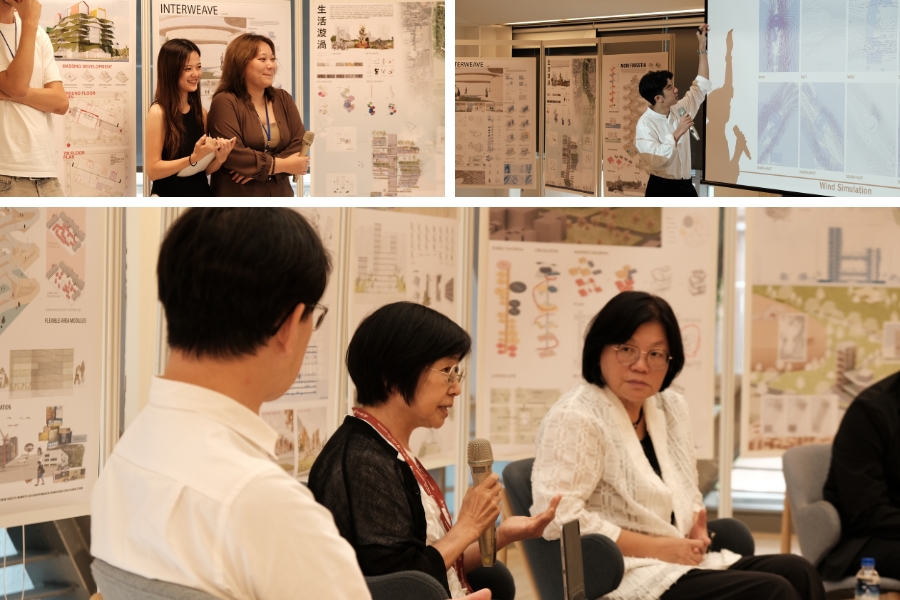
At the workshop's final review and international symposium, Japan Women's University President Satoko Shinohara guided students in person and took part in academic exchange.
Share:
Related News