


Share:
The winners of the 2026 National Art Exhibition, organized by the National Taiwan Museum of Fine Arts under the Ministry of Culture, were announced on July 18. Cheng-you Shin, a faculty member of the Center for General Education at Feng Chia University, received the highest honor in the calligraphy category, winning the Gold Medal for his work Viewing the Snow at the Lake Pavilion. Drawing inspiration from the celebrated essay by late Ming dynasty writer Zhang Dai, Shen transformed a classical literary text into a contemporary visual artwork through the use of large-scale Zhangcao script and carefully composed colophons. The achievement also marks another milestone for Chinese character art education at the University’s You Han Tang Center for Chinese Character Studies.
The award-winning work is distinguished by its striking visual contrasts in slant and balance, scale and proportion, as well as lightness and weight, reflecting the artist’s thoughtful selection and interpretation of the text. The main text on the right side is written in large Zhangcao characters, bold in form and rich in ink, with strokes that combine strength and elegance like layers of mountain peaks. On the left, three elongated colophons in smaller script provide a delicate counterpoint, demonstrating meticulous attention to detail. The interplay between large and small, movement and stillness, creates a dynamic equilibrium that showcases the comprehensive compositional skill required for major exhibition works.
Notably, although Zhang Dai’s original essay consists of just over 150 Chinese characters, Shen did not reproduce the entire text. Instead, he intentionally stopped at the famous phrase describing the snowy landscape as “a world of pure white.” This decision was not merely an excerpting of the text, but a deliberate artistic strategy to emphasize the boundless vastness of nature and humanity’s small place within time and space. In doing so, the work amplifies the profound nostalgia and loneliness felt by late Ming literati in the face of dynastic change.
Reflecting on the inspiration behind the work, Cheng-you Shin noted that what moved him most about Viewing the Snow at the Lake Pavilion was not the depiction of snow itself, but the spiritual strength hidden beneath its calm prose. Writing in the aftermath of a turbulent transition between dynasties, Zhang Dai continued to date events according to the Chongzhen reign era rather than adopting the Qing dynasty calendar, demonstrating a steadfast commitment to cultural memory and intellectual values. The snow-covered West Lake in the essay symbolizes a reality that has been obscured and transformed. To Zhang Dai, the pure white landscape seemed to suggest that everything had been lost, that the past had vanished, yet the refined and flourishing world of the late Ming dynasty remained alive in his memory. It was a world he refused to let disappear.
According to the You Han Tang Center for Chinese Character Studies at Feng Chia University, Cheng-you Shin has long devoted himself to both calligraphy creation and teaching, continually exploring new possibilities for dialogue between traditional calligraphy and contemporary art. His Gold Medal achievement reflects the growing emphasis in contemporary calligraphy on literary depth and historical reflection, while also highlighting the Center’s longstanding success in cultivating outstanding calligraphy artists.
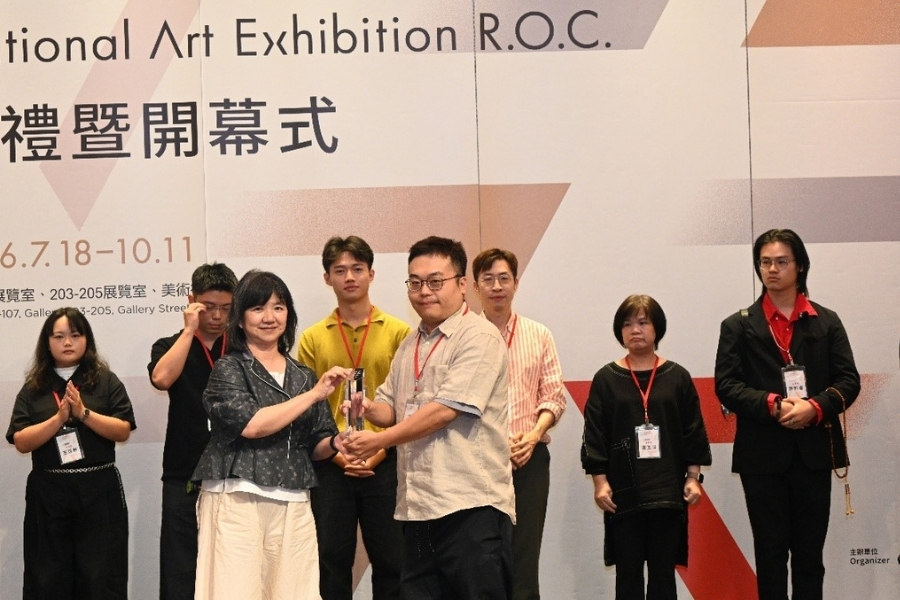
Cheng-you Shin, a faculty member of the Center for General Education at Feng Chia University, won the Gold Medal in the Calligraphy Category at the 2026 National Art Exhibition. [2025.07.16逢甲大學雙語詞彚庫 | Excel]
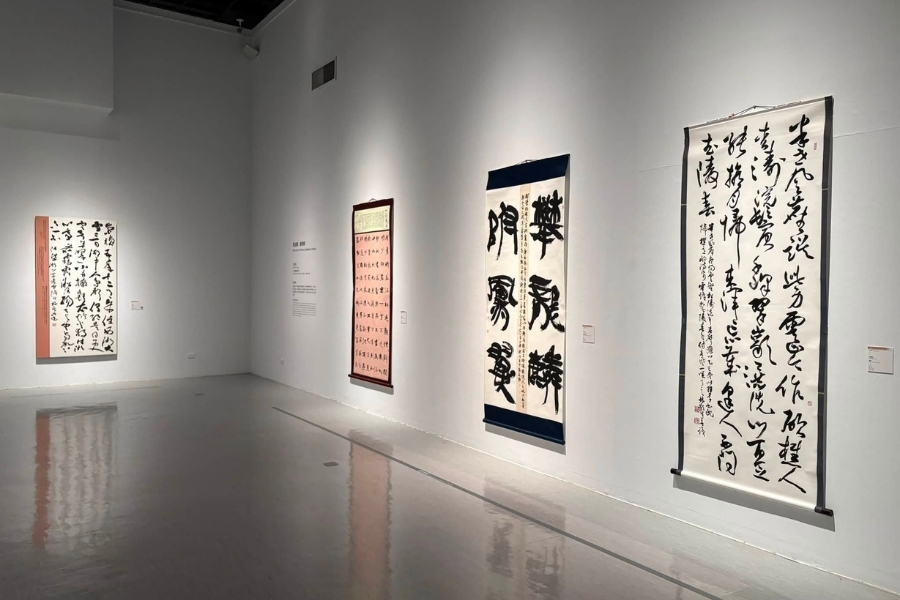
Award-winning works from the 2026 National Art Exhibition are now on display at the National Taiwan Museum of Fine Arts and will remain open to the public through October 11.
Share:
Related News