


Share:
As the Dragon Boat Festival approached, the College of Humanities and Social Sciences at Feng Chia University hosted a cultural classics lecture on June 2 in the B2 Lecture Hall of the Library. Titled“What Does Qu Yuan Teach Us?”, the event featured Professor Chi-Pang Ho, University Advisor and Distinguished Lecturer, who guided students and faculty in reexamining Qu Yuan’s character, core values, and enduring influence on Chinese culture and literary traditions.
Opening the lecture, Professor Ho remarked that discussing Qu Yuan may seem somewhat out of step with today's fast-paced society, which emphasizes innovation and rapid adaptation. Nevertheless, he argued that certain timeless values remain essential to human civilization, and that revisiting Qu Yuan offers an opportunity to reflect on ideals of character and cultural identity.
Professor Ho began by introducing Qu Yuan’s background and the historical context of the Warring States period. As a nobleman of the State of Chu, Qu Yuan possessed exceptional political and diplomatic abilities and enjoyed the trust of the king. He played an important role in government affairs and foreign relations. However, political intrigue and poor strategic decisions by the Chu court gradually weakened the state. Influenced by the persuasion of Zhang Yi, Chu severed its alliance with Qi, resulting in declining national strength. Through this historical narrative, Professor Ho helped participants better understand both the complexity of the era and Qu Yuan’s prolonged exile and unrealized ambitions.
Discussing Qu Yuan’s character, Professor Ho drew upon literary classics such as Li Sao (The Lament) and The Fisherman to illustrate Qu Yuan’s unwavering commitment to his principles and moral ideals. Even when confronted with hardship, misunderstanding, and isolation, he refused to compromise his beliefs. Professor Ho contrasted this stance with the Daoist concept of “adaptation to the world,” presented in The Fisherman, highlighting the differing approaches of Confucianism and Daoism toward life’s challenges. The comparison encouraged students to consider the dilemmas intellectuals often face between ideals and reality.
Professor Ho also explored the traditional Chinese distinction between “engagement with the world” and “withdrawal from the world.” He explained that many scholars throughout history aspired to contribute to society and public affairs. Yet when their ideals could not be realized, some chose a life of retreat while preserving their personal integrity, giving rise to an important spiritual tradition within Chinese culture.
Turning to literary influence, Professor Ho emphasized Qu Yuan’s significance in the development of Chinese literature. Through the Songs of Chu (Chu Ci), Qu Yuan established a distinctive lyrical tradition that profoundly influenced later literary themes, particularly the motif of the unrecognized scholar. His frequent use of symbolic imagery, such as fragrant plants and idealized beauty, also became a defining feature of classical Chinese literary expression.
Concluding the lecture, Professor Ho encouraged students to cultivate not only professional skills but also a clear set of personal values. In an era marked by rapid change and uncertainty, he stressed that maintaining a strong inner compass and a firm sense of purpose is essential to navigating life's challenges and finding lasting fulfillment.
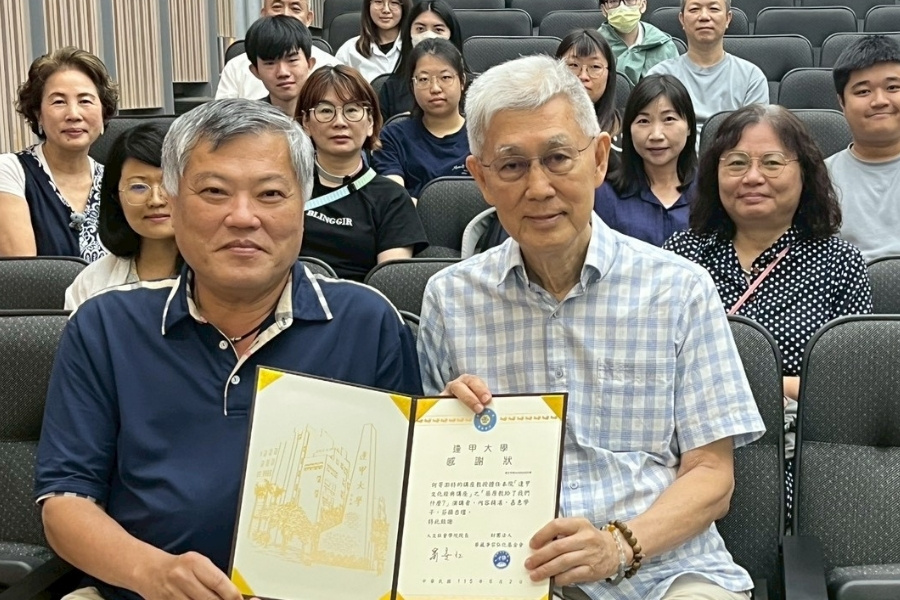
The College of Humanities and Social Sciences hosted a Cultural Classics Lecture on June 2, featuring University Advisor and Distinguished Lecturer Professor Chi-Pang Ho (right), who spoke on the topic “What Does Qu Yuan Teach Us?
Share:
Related News