


Share:
The results of the 2026 Explore Taiwan 120h – We Farm We Grow Competition, jointly organized by the CTCI Foundation and the Taiwan Institute for Sustainable Energy, have been announced. A multinational student team, “Four Sources, One Future,” formed by students from the Department of International Business and the Department of Marketing at Feng Chia University, distinguished itself among more than one hundred participating teams from across Taiwan.
Following an intensive 120-hour field exploration challenge, the team captured Third Place Overall, the Best Popularity Award, and Third Place for Best Video, demonstrating outstanding international perspectives, interdisciplinary collaboration, and sustainability-focused innovation.
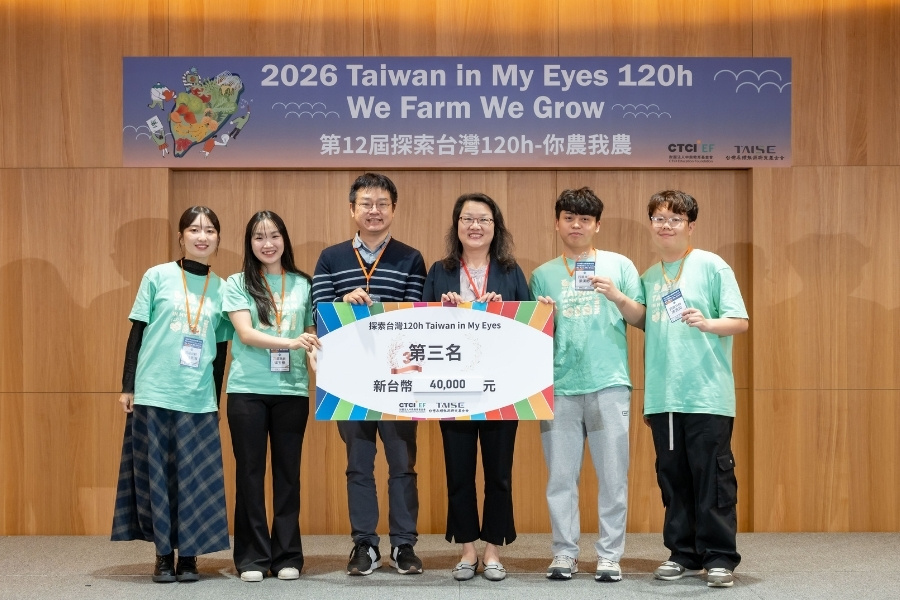
Under the guidance of Professor Shih-Ching Liu from the Department of International Business, the multinational Feng Chia University team “Four Sources, One Future” won Third Place Overall in the 2026 Explore Taiwan 120h competition.
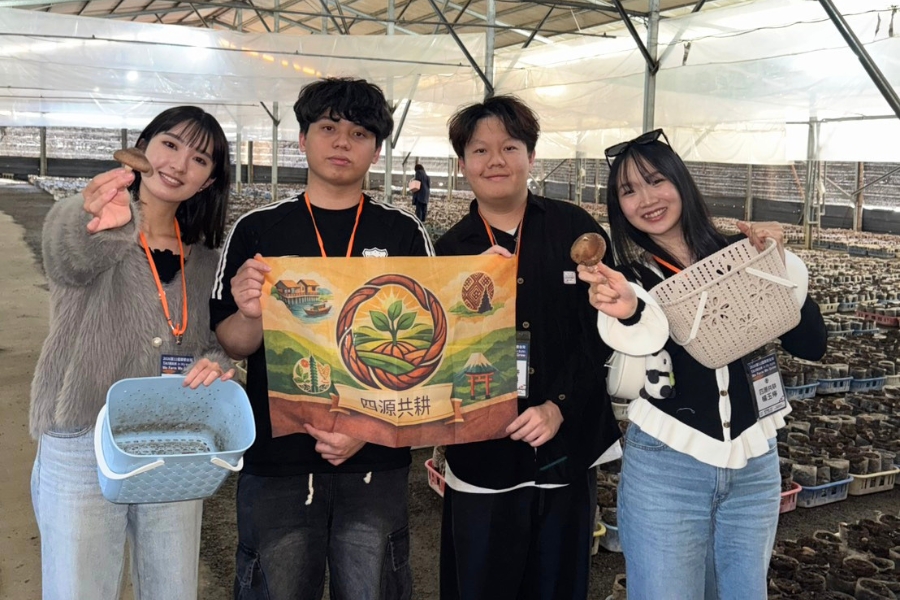
After completing an intensive 120-hour field exploration challenge, the “Four Sources, One Future” team successfully developed a travel and learning route that combined in-depth investigation with sustainability-focused value creation.
The competition was designed to deepen university students’ understanding and practical application of the United Nations Sustainable Development Goals (SDGs). The event attracted highly competitive teams, including master’s and doctoral students from leading institutions such as National Taiwan University and National Central University.
The Feng Chia team consisted of Cheng-Yu Tu, Han-Pin Liang, and Yu-Ning Yang from the Department of International Business, together with Fumi Buse from the Department of Marketing. Under the guidance of Professor Shih-Ching Liu, the team successfully advanced to the final round, where only 13 teams competed.
Representing Taiwan, Japan, Indonesia, and Hong Kong, the team brought together diverse cultural perspectives and collaborated under the concept of “Core Insights, Localized Interpretation.” Their approach focused on establishing verifiable field research data and key observations, then translating these findings into narratives and actionable recommendations that resonated across different cultural contexts.
By integrating Japanese quality standards, Indonesian practicality, Hong Kong’s perspectives on markets and trust, and Taiwan’s local innovation practices, the team developed an “Asian Youth Sustainability Declaration” with cross-cultural relevance. As a result, their project went beyond documenting field visits and evolved into a sustainability proposal with the potential for broader adoption and future development, ultimately earning Third Place Overall.
To present their findings effectively, the team adopted a thematic value-chain framework that linked topics including water resources, seed preservation, cultivation methods, processing transparency, and food and agricultural education. This structure avoided fragmented, diary-style reporting and enabled judges to clearly understand the progression from problem identification to solution development and ultimately action implementation.
Their promotional video further showcased an international storytelling style and strong visual aesthetics, illustrating how young people from different cultural backgrounds collaborated in Taiwan to understand and address food-safety issues. The production quality and compelling narrative led to the team receiving both the Best Popularity Award and Third Place for Best Video.
Reflecting on the team’s achievement, Professor Shih-Ching Liu noted that it was particularly impressive to witness students demonstrate such a high level of self-discipline, teamwork, and integrative communication under the demanding 120-hour competition format.
He emphasized that the students not only developed a systematic analysis of sustainability issues but also successfully communicated their findings to broader audiences through multimedia storytelling, giving their work the potential for wider social impact.
According to Liu, the project exemplifies the distinctive qualities cultivated at Feng Chia University, including sustainability literacy, international communication skills, and the ability to transform ideas into practical, real-world initiatives.
Building upon the experience and outcomes of this competition, the team plans to continue exploring sustainability-related issues and advancing social advocacy efforts. They hope to transform their Taiwan-based field experiences into opportunities for broader international dialogue, collaboration, and sustainable development initiatives.
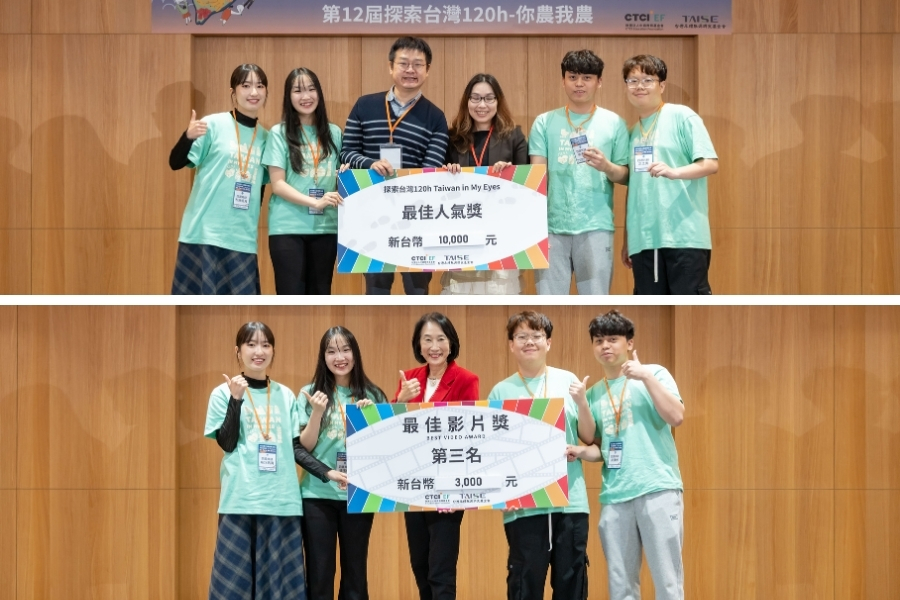
Demonstrating exceptional interdisciplinary collaboration, the Feng Chia University team “Four Sources, One Future” earned Third Place Overall, the Best Popularity Award, and Third Place for Best Video.
Share:
Related News