


Share:
The HACK-4-SAGES Astrobiology Digital Twins International Hackathon, a global competition organized by the prestigious ETH Zürich (Swiss Federal Institute of Technology Zurich), concluded successfully on March 13. Under the guidance of Professor Huai-Chung Hsu from the Department of Information Engineering at Feng Chia University, four students formed a team to compete in this highly selective international event: Hong-Yu Chou, President of AI Club; Ping-Yu Chen, President of the Hacker Club; and club officers Ming-Yu Lin and Yu-Chieh Cheng.
After months of intensive development and preparation, the team distinguished itself among elite participants from around the world. The project earned an Honorable Mention, making it the only team from Taiwan to receive this distinction and highlighting the international competitiveness of Feng Chia students in interdisciplinary science and emerging technologies.
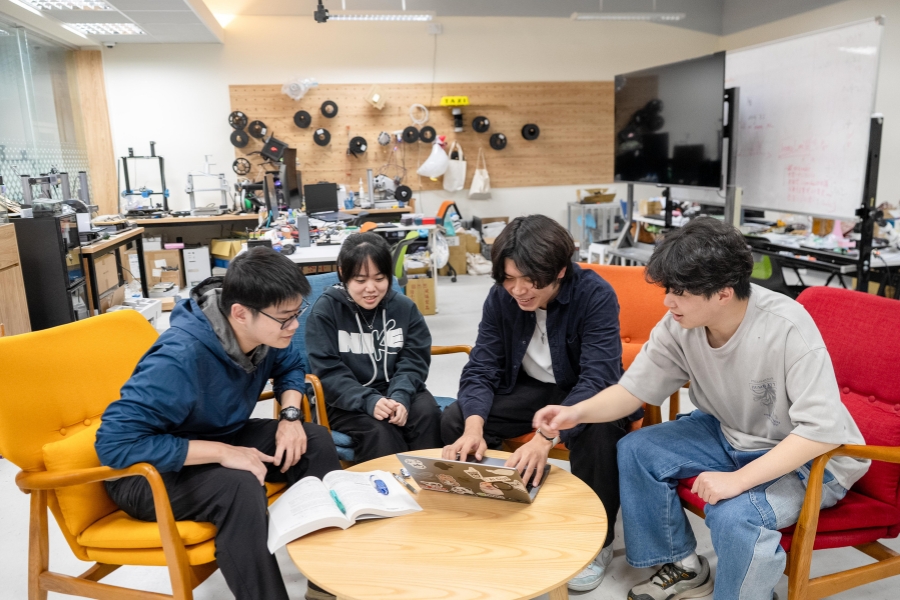
AI Club President Hong-Yu Chou, together with Hacker Club President Ping-Yu Chen and club officers Ming-Yu Lin and Yu-Chieh Cheng, received an Honorable Mention at the international hackathon organized by ETH Zürich.
HACK-4-SAGES is a highly interdisciplinary international hackathon that focuses on integrating Astrobiology and Digital Twin technologies. This year’s competition featured three major themes:
Origins of LifeLife Detection and BiosignaturesExoplanet Habitability
The competition was exceptionally competitive. Only 60 teams worldwide advanced to the final round, and each category presented just one Main Prize and two Honorable Mentions.
The Feng Chia team first submitted its proposal on January 12 and successfully advanced through multiple selection stages to secure a place among the global top 60 finalists. During the international final competition held from March 9 to 13, the four students combined their expertise to develop ExoSpectrumDenoise.
The project utilizes simulated planetary spectral data from NASA to construct a digital twin system and integrates advanced denoising techniques to improve the quality of observation data collected by the James Webb Space Telescope (JWST). By simulating atmospheric conditions on Earth-like planets, the team trained a model capable of accurately reconstructing spectral signals. The primary objective is to significantly improve the detection of chemical disequilibrium on exoplanets, an important indicator in determining whether signs of biological activity may be present.
Beyond its clear scientific foundation, the project also demonstrated strong practical potential. The team’s approach could support future data-processing efforts for JWST observations as well as upcoming international exoplanet missions such as ARIEL and the Habitable Worlds Observatory. Its scientific rigor and real-world applicability ultimately impressed the international judging panel and led to the Honorable Mention recognition.
The student team reflected that developing a functional and convincing project within the tight timeframe of a hackathon was a significant challenge. However, they were particularly excited to explore the unfamiliar field of astrobiology and apply the knowledge they had accumulated through their studies in Information Engineering and participation in technical student organizations. The opportunity to gain recognition on an international stage made the experience especially meaningful.
According to Feng Chia University, this achievement not only reflects the dedication of the team members but also demonstrates the success of the university’s long-term implementation of the CDIO (Conceive–Design–Implement–Operate) educational model. The university currently supports multiple student-led technology communities, including Google Developer Groups on Campus FCU, iOS Club, AI Club, and the Hacker Club, all of which provide platforms for innovation, interdisciplinary learning, and practical problem-solving under faculty mentorship.
Looking ahead, Feng Chia University will continue investing resources to encourage students to participate in hands-on competitions and international challenges, cultivating interdisciplinary talents equipped with the creativity, technical expertise, and practical skills needed to solve real-world problems.
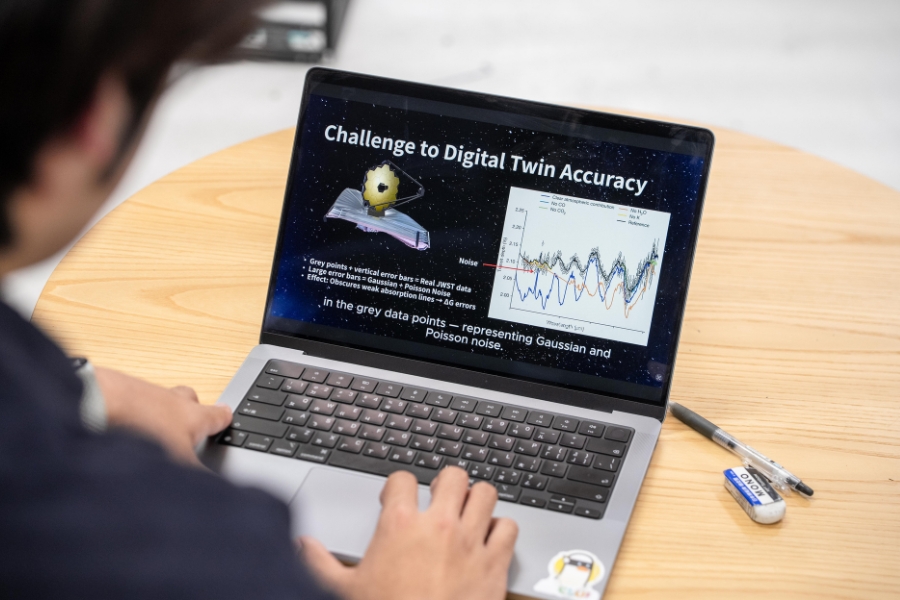
The Department of Information Engineering team from Feng Chia University stood out with its project ExoSpectrumDenoise, becoming the only team from Taiwan to receive an award at the international HACK-4-SAGES hackathon.
Share:
Related News