


Share:
When business management meets Italian design aesthetics, what kind of innovation emerges?
This summer, from June 27 to July 9, 15 students from the College of Business at Feng Chia University, led by Dean Chiung-Ju Huang and Professor Giorgio, embarked on a two-week overseas learning journey in Italy. Traveling across the cities of Milan, Modena, and Turin, the program connected students with three leading European universities and offered firsthand exposure to internationally renowned companies such as Ferrari and Maserati. Through immersive cross-cultural experiences, students gained practical insights into the power of design thinking and brand innovation.
The College of Business Summer Overseas Learning Program integrated classroom learning, corporate practice, and cultural exploration into a comprehensive educational experience. Partner institutions included the internationally recognized POLI.design – Design Master School of Politecnico di Milano, the University of Modena and Reggio Emilia (UNIMORE), and the University of Turin (UNITO).
The curriculum focused on four key themes:
- Design Thinking
- Strategic Design
- Brand Management
- Corporate Innovation
During the English-medium courses at POLI.design, students did far more than attend lectures. They were required to develop new product concepts from scratch, create marketing proposals, and present their projects to Italian professors.
Pei-Yu Liao, a third-year student from the Department of Accounting, was particularly inspired by a classroom case study on strategic design.
“The professor used elevator waiting time as an example,” she explained. “When people complain that elevators are too slow, most assume the solution is to improve the technology and increase speed. However, strategic design focuses on the real problem. What people actually dislike is that the waiting process feels boring.”
As a result, adding mirrors or interactive installations near elevators may be a more effective solution than increasing elevator speed itself.
Liao noted two major takeaways from the course. First, she learned to think beyond conventional assumptions and identify the root causes of problems. Second, she gained confidence in communication. Once she fully understood a concept, she found that she could articulate her ideas clearly and confidently during English presentations without relying on a prepared script.
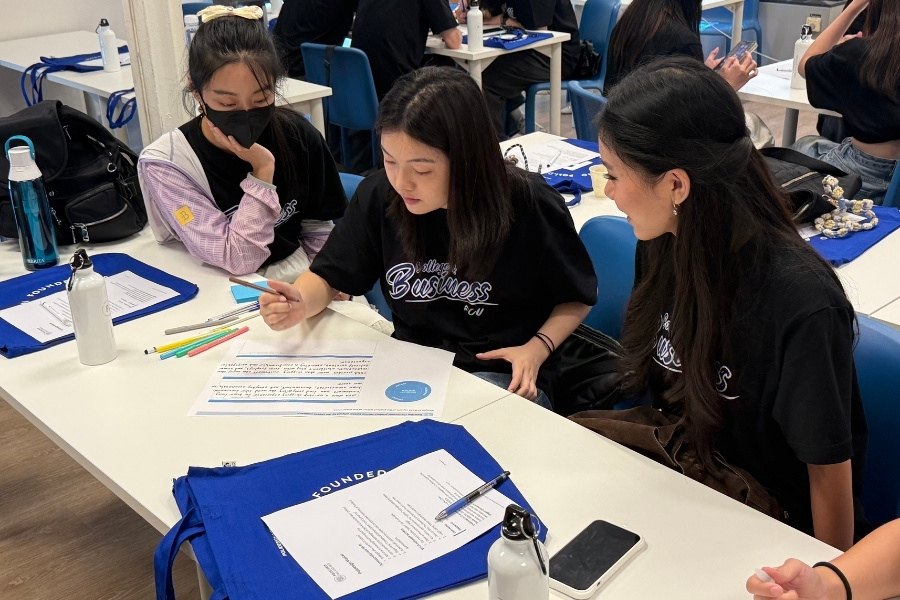
Through interactive group discussions, students transformed design thinking concepts into concrete project ideas and innovative business proposals.
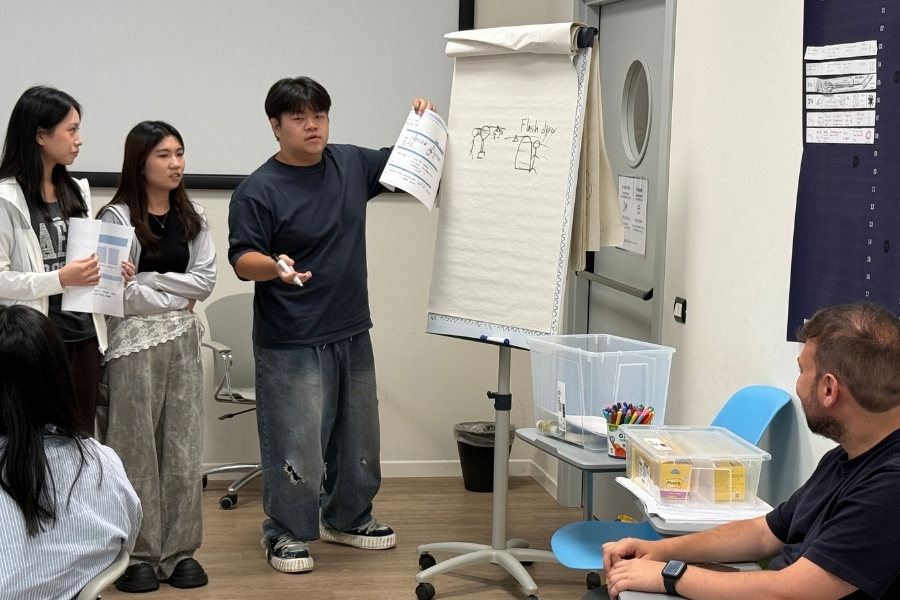
In the Strategic Design course at POLI.design, taught by Prof. Gianluca Carella, students participated in group discussions and delivered their final project presentations entirely in English.
In addition to academic learning, corporate visits were among the highlights of the program.
Students visited prominent organizations and institutions including:
- Deloitte
- Maserati
- Marazzi
- Ferrari Museum
- Lavazza Museum
Through presentations and discussions with corporate executives, participants observed how international companies integrate smart manufacturing, digital transformation, and ESG sustainability principles into their operations. They also witnessed how organizations transform cultural heritage into globally influential brand value.
Tzu-Sung Su, a third-year student from the Department of Marketing, described the experience as his greatest personal breakthrough.
“In Taiwan, I often avoided speaking English because I lacked confidence,” he said. “But in Italy’s fully English-speaking learning environment, I had no choice but to stand up and present. Once I started, I realized that as long as my ideas were logical and communicated effectively, the fear was far less overwhelming than I had imagined.”
For Yu-Chen Chen, a third-year student from the Department of International Business, the experience fostered personal growth in an unfamiliar environment.
She reflected that much of her understanding of the world had previously come from textbooks and online resources. By living and learning in Italy, she was exposed to a completely different educational system and lifestyle. The experience helped her become more independent and encouraged her to embrace new ideas with a more open and global perspective.
“Global mobility has become an essential competency for future business professionals,” said Dean Chiung-Ju Huang.
She emphasized that the College of Business has long been committed to advancing international education and English-Medium Instruction (EMI) courses. Through overseas immersion programs, the College seeks to encourage students to step beyond the classroom and engage directly with the world.
Dean Huang noted that the Italy program was not only about acquiring professional knowledge. More importantly, it helped students build confidence in cross-cultural communication while expanding their international networks.
Looking ahead, the College of Business at Feng Chia University will continue strengthening partnerships with institutions around the world and developing diverse overseas learning opportunities. These initiatives aim to provide students with a solid foundation for future exchange programs, international careers, and global professional development.
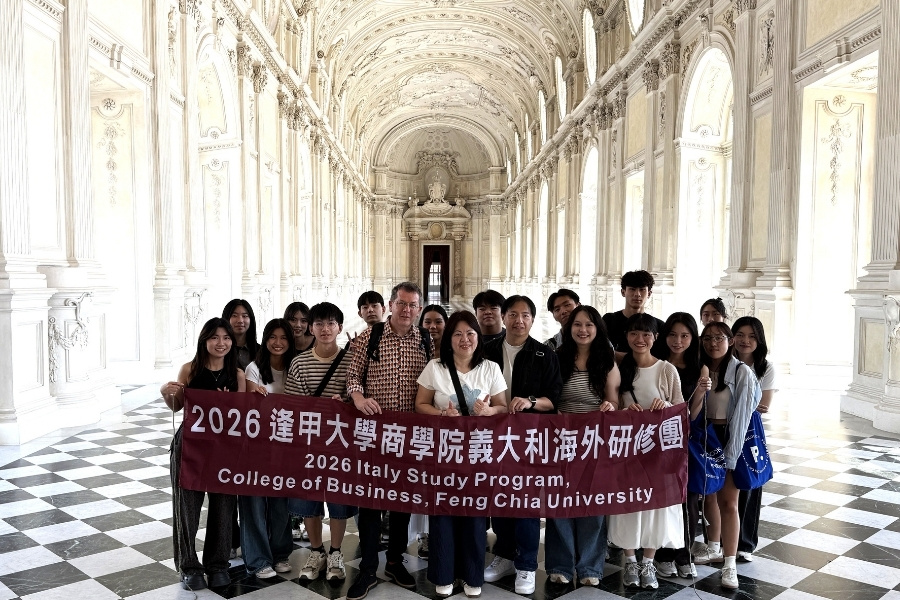
Chiung-Ju Huang, Dean of the College of Business at Feng Chia University, led 15 students to Italy for an immersive learning experience exploring interdisciplinary innovation, strategic design, and brand management.
Share:
Related News