


Share:
The College of Construction and Development at Feng Chia University hosted a hackathon for its Exploratory Course Future Cities and Smart Living during the 2025–2026 academic year. Held on June 7 at the Smart City Collaborative Learning Hall, the competition showcased the University's newly launched interdisciplinary elective program for first-year students. Introduced in the second semester of the academic year, the Exploratory Course initiative encourages freshmen to explore learning opportunities beyond their major fields in a low-risk environment.
Centered on interdisciplinary teams composed of freshmen from different colleges and departments, the hackathon challenged participants to respond to real-world issues related to smart cities and sustainable development through intensive hands-on collaboration and final project presentations.
Running from 10 a.m. to 5 p.m., the event required teams to complete concept development, model construction, and project presentations within a limited timeframe. Projects included conceptual design proposals, problem analyses, and physical models. The judging panel featured Yi-Heng Meng, Director of the Software Technology Institute, Institute for Information Industry (III STI); Chao-Fu Yeh, Director-General of the Transportation Bureau of the Taichung City Government; and Lan-Kun Chung, Chairman of Singularity Infinity Co., Ltd., who provided professional feedback and industry insights.
The first-place team, composed of students from the Department of Aerospace and Systems Engineering, presented Floating City: Smart Living and Disaster Resilience Innovation. Their proposal envisioned a sustainable future built on ocean-based development rather than continued land consumption. The design featured modular artificial islands inspired by honeycomb structures, incorporating catenary support systems, flexible structural members, and dampers to enhance resilience. The concept also integrated wave-energy generation to create a sustainable and resilient power network, supported by a detailed physical model.
Students participating in the course noted that, as non-construction majors, they initially had little knowledge of the subject matter. However, after a semester of interdisciplinary learning, their perspectives changed significantly. Through group discussions, cross-disciplinary collaboration, and participation in the hackathon, they gained a deeper understanding of emerging issues such as smart cities and sustainable development while strengthening their problem-solving and creative thinking abilities. One student described it as “the most worthwhile course I’ve taken this semester.”
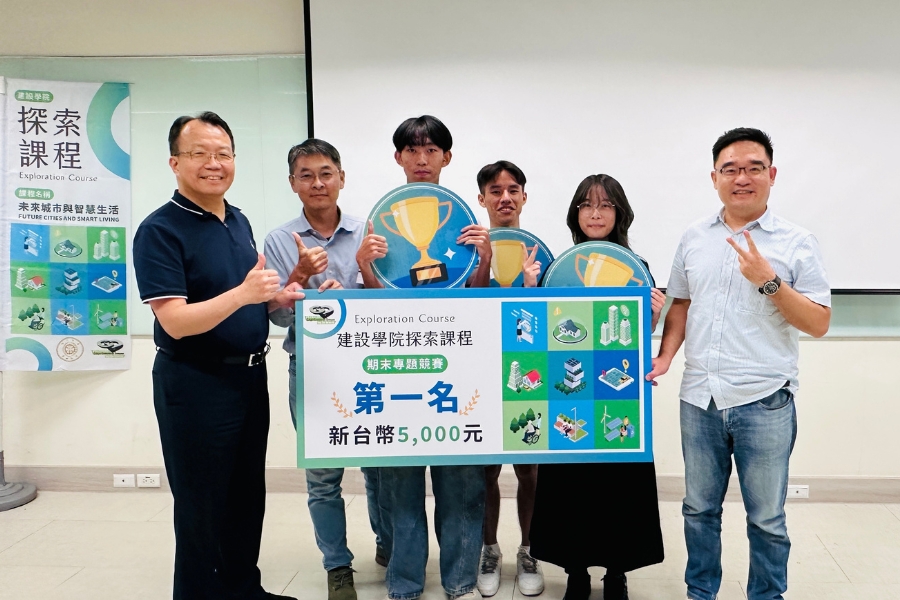
The project “Floating City: Smart Living and Disaster Resilience Innovation,” created by students from the Department of Aerospace and Systems Engineering, won first place. The award was presented by Yi-Heng Meng (left), Director of the Software Technology Institute, Institute for Information Industry.
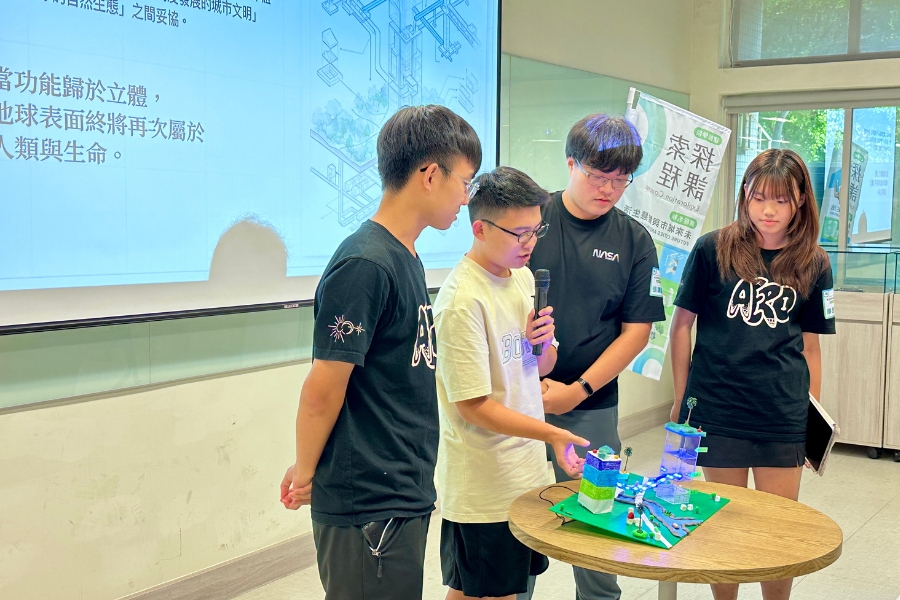
Interdisciplinary student teams presented their projects and physical models, earning recognition from the judging panel for their innovative ideas.
The College of Construction and Development adopted a co-teaching model this year. Visiting Professor Tse-Fong Tseng designed the course framework around future smart living concepts and collaborated with Dean Jau-Ming Su and ten other faculty members from different disciplines to guide students in exploring various dimensions of future urban development.
The course also incorporated Design Thinking resources from the Ministry of Education’s Project on Experimental and Constructive Approaches for New Engineering Education, enabling students to transform ideas into actionable solutions through problem identification, team collaboration, and model development.
The hackathon not only demonstrated the College’s achievements in interdisciplinary education but also laid a strong foundation for students interested in pursuing future studies and careers in smart cities and sustainable development.
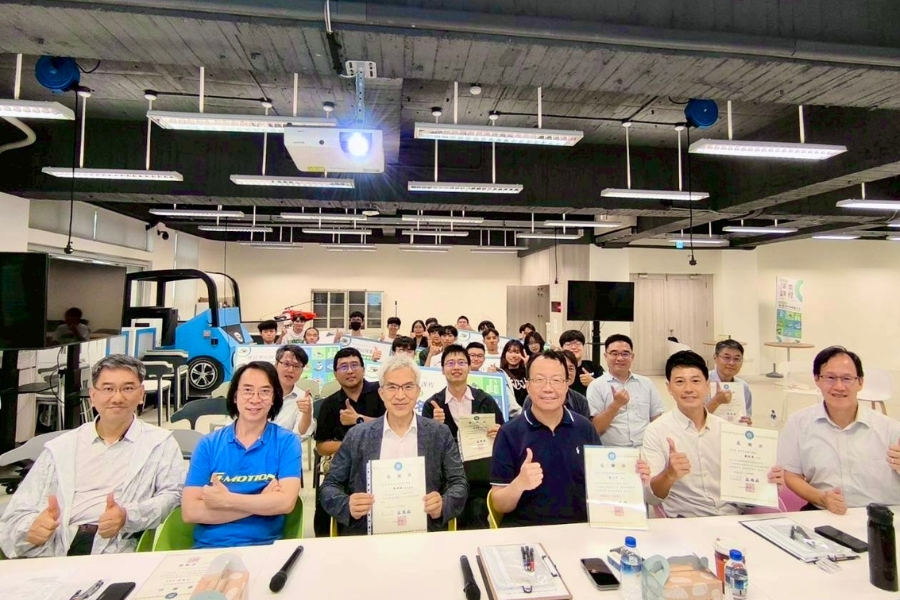
Dean Jau-Ming Su (right) of the College of Construction and Development poses for a group photo with competition judges, faculty members, and students participating in the 2025–2026 Exploratory Course Hackathon.
Share: