


Share:
Vice President Bi‑khim Hsiao met with the award‑winning master’s and doctoral students of the 18th Coretronic Thesis Award 2025 at the Presidential Office on the morning of December 4. Among nearly a thousand submitted papers, Chui‑Hong Chiu, a master’s student from the Department of Automatic Control Engineering, Feng Chia University, stood out with his AI model capable of accurately predicting road conditions, earning the Top Honor in the Master’s Group – AI Technology Development and Applications category.
Praised as the “Oscars of Management Studies,” the Coretronic Thesis Award this year focused on three key areas: AI healthcare, industrial management, and technology development. A total of 928 papers from 13 countries competed. Feng Chia University performed exceptionally well, winning three awards in total.Under the guidance of his advisor Professor Yu‑Chen Lin, Chui‑Hong Chiu completed his paper, “Step‑wise Multimodal Trajectory Prediction Network Integrating Temporal Attention and Gated Residual Mechanism.” Its innovative and practical approach deeply impressed the judges, earning it the highest recognition.
In her remarks, Vice President Hsiao noted that the competition was highly intense this year, making the award even more remarkable. As AI rapidly evolves, humanity stands at a critical turning point in history and technological development. She emphasized the importance of guiding artificial intelligence toward human‑centered, ethical, and value‑driven applications while addressing challenges in work environments and society.
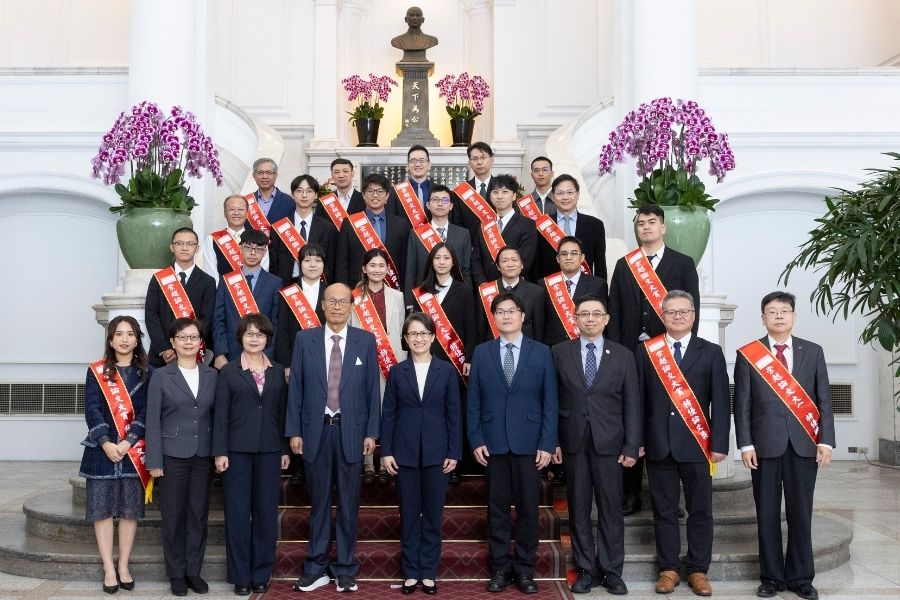
Chui‑Hong Chiu from the Department of Automatic Control Engineering, Feng Chia University, won the Top Honor in the Master’s Group – AI Technology Development and Applications, and was received by Vice President Bi‑khim Hsiao at the Presidential Office.
Addressing previous foreign media descriptions of Taiwan’s traffic as a “pedestrian hell,” Chiu’s study targets the core of the issue by proposing a novel AI prediction model. The technology forecasts the future paths and behavioral intentions of dynamic objects such as pedestrians and vehicles, significantly enhancing the response time of Advanced Driver Assistance Systems (ADAS). Chiu stated that beyond academic breakthroughs, he hopes the technology can be integrated into intelligent vehicles and traffic monitoring systems to improve road safety in Taiwan’s complex traffic environment.
Notably, after winning the award, Chiu shared a powerful reflection on his academic journey. He admitted that with his excellent academic record, he could have entered what many consider elite national universities. Yet, he chose to remain at Feng Chia University.
“People around me kept asking why I didn’t go elsewhere. But in my heart, I knew that at the graduate level, choosing the right advisor is far more important than choosing a prestigious school,” he said. Chiu emphasized that Feng Chia University offers a highly competitive and advanced research environment. During his four undergraduate years, he had already witnessed the strong research capacity of Professor Yu‑Chen Lin and his laboratory. Instead of pursuing the fame of a big‑name university and restarting from scratch, he preferred to continue building on an already solid foundation—“standing on the shoulders of giants” to engage in deep, meaningful research.
Ultimately, his decision was validated by the results of the Coretronic Thesis Award. Chiu stressed that this top honor proves that with clear goals and determination, a school’s name is never the ceiling of one’s development.
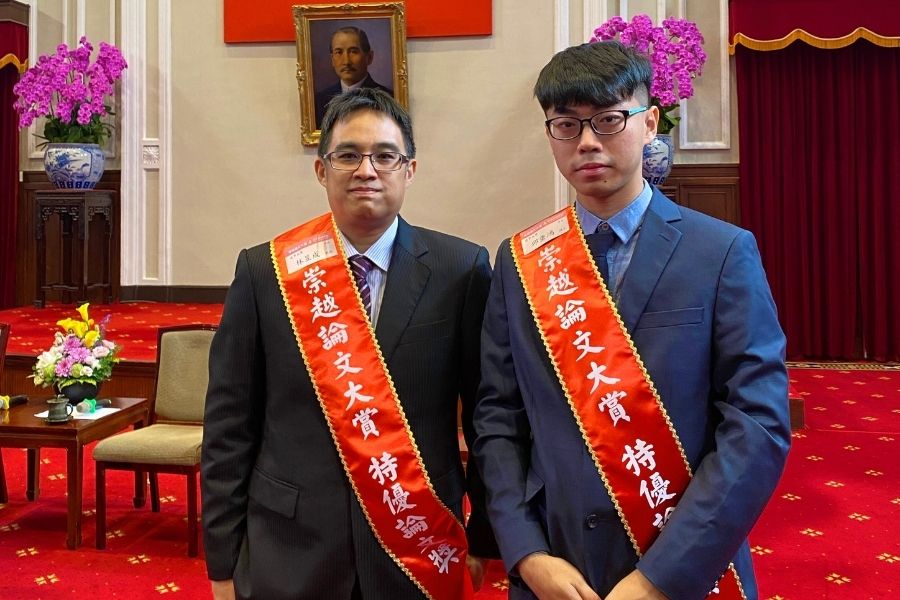
“Choosing the right advisor is far more important than choosing a big‑name school.” Under the guidance of Professor Yu‑Chen Lin, Chui achieved top recognition and attributed his success to the rigorous training of the laboratory—demonstrating that Feng Chia University students’ research capabilities rival those of the most prestigious institutions.
Hosted by the Taiwan Academy of Management, this year’s Coretronic Thesis Award selected 178 outstanding papers after rigorous review. Feng Chia University showcased its strong capabilities in AI technological development and interdisciplinary applications. Not only did the university shine in academic competitions, but its students’ work also directly responded to society’s urgent concerns regarding traffic safety.
Share:
Related News