

Kengo Kuma’s “Negative Architecture” — Feng Chia University’s Virtuosi Hall Wins Taichung Urban Design Award
The winners of the 12th Taichung Urban Spatial Design Award were announced today (29th). Feng Chia University’s Virtuosi Hall, a landmark of the university’s new Shuinan Campus, stood out among more than a hundred submissions and was honored with the Special Jury Award for its design philosophy rooted in harmonious coexistence with the environment. At the award ceremony, Chairperson Cheng‑Shu Kao, President Wang, Wei, and the architectural team attended the event, with President Wang accepting the award on behalf of the university. The recognition symbolizes the professional and public affirmation of Virtuosi Hall as an exemplary model of Kengo Kuma’s concept of “negative architecture.”
Located on the southern end of Feng Chia University’s 5.7‑hectare Shuinan Campus adjacent to the Central Park of the Shuinan Economic and Trade Park, Virtuosi Hall was designed by world‑renowned architect Kengo Kuma. Since its planning stage, the project has drawn significant attention. The two‑story building covers a floor area of approximately 14,677 square meters, adopting a low‑height, wide‑span architectural layout that creates an open, flowing, and permeable learning village.
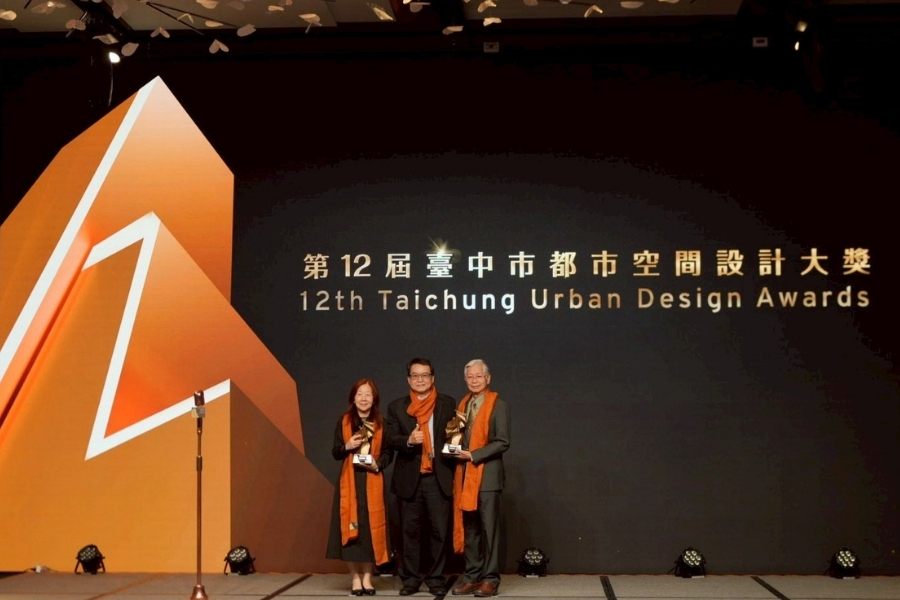
Virtuosi Hall, winner of the Special Jury Award in the 12th Taichung Urban Spatial Design Award, was presented by Taichung City Government Secretary‑General Huang Chong‑Tien. President Wang, Wei (left) and Honorary Distinguished Professor and Counselor for University Affairs Lung‑Shih Yang (right) jointly received the award on stage.
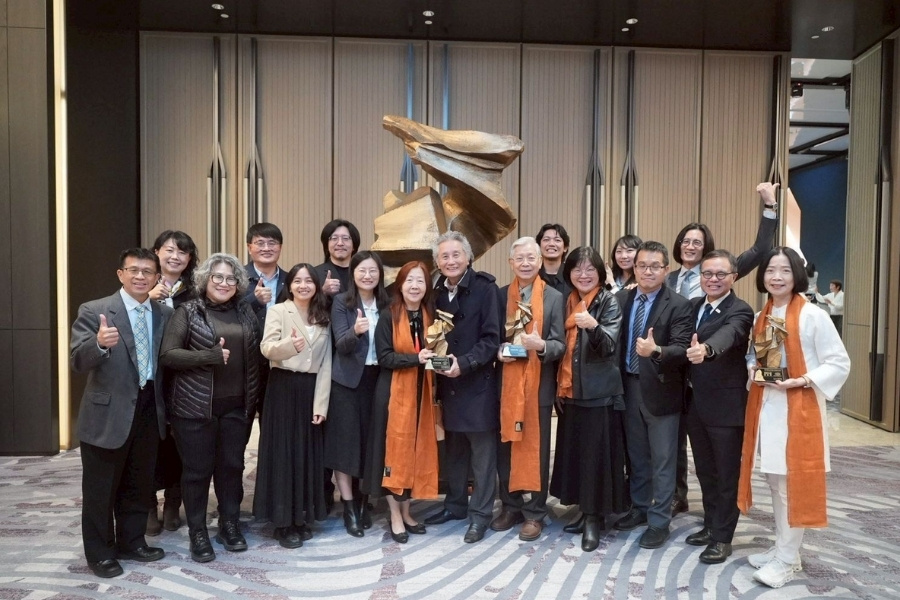
Chairperson Cheng‑Shu Kao, President Wang, Wei, and the architectural team also gathered for a commemorative photo to mark this milestone of architectural and campus‑planning achievement.
The spatial design integrates flexibility and multifunctionality. It includes the Birthday Hall for large academic lectures, general education courses, and arts performances; a Grand Auditorium equipped with smart systems and global conferencing technology; versatile spaces for interactive teaching and interdisciplinary discussions; as well as 21 classrooms and six public areas filled with natural light and greenery. Virtuosi Hall is more than a structure—it is a physical embodiment of Feng Chia University’s educational ideals, providing the next generation with a learning environment defined by openness, dialogue, creativity, and the common good.
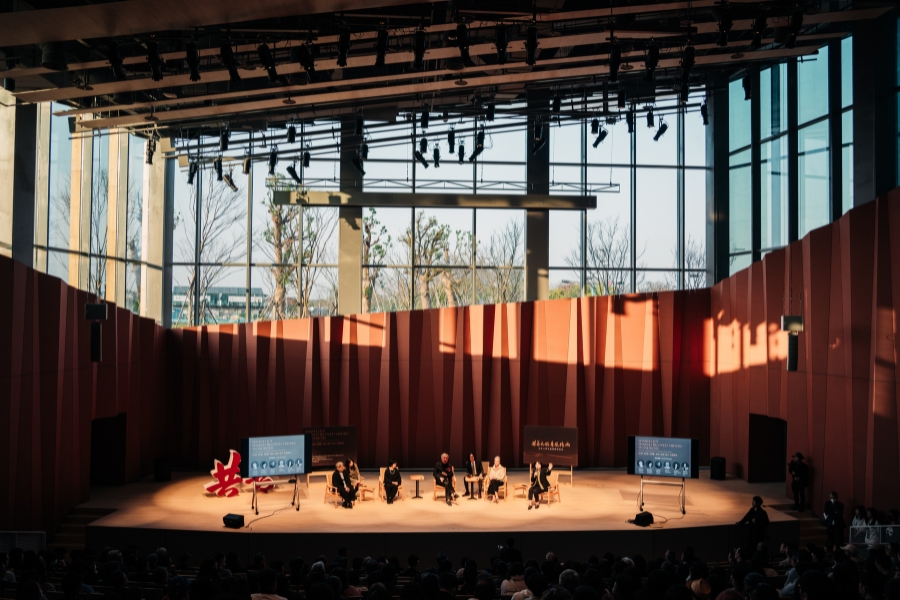
Designed by internationally acclaimed architect Kengo Kuma, the building embodies a new paradigm of shared space between university education, urban environments, and people.
The building features a 46% greening rate, while the overall campus landscape achieves an impressive 82% green coverage. More than 570 trees have been planted, including several over 70‑year‑old heritage trees, making the building appear as though it naturally emerges from the land. The project has also obtained low‑carbon building certification, with carbon‑reduction benefits estimated at nearly 20,000 tons over the next 60 years. Kengo Kuma’s signature “negative architecture” approach ensures that the structure does not impose itself through grandeur, but instead retreats humbly, allowing nature to take center stage and becoming one of the softest breathing spaces within the city.
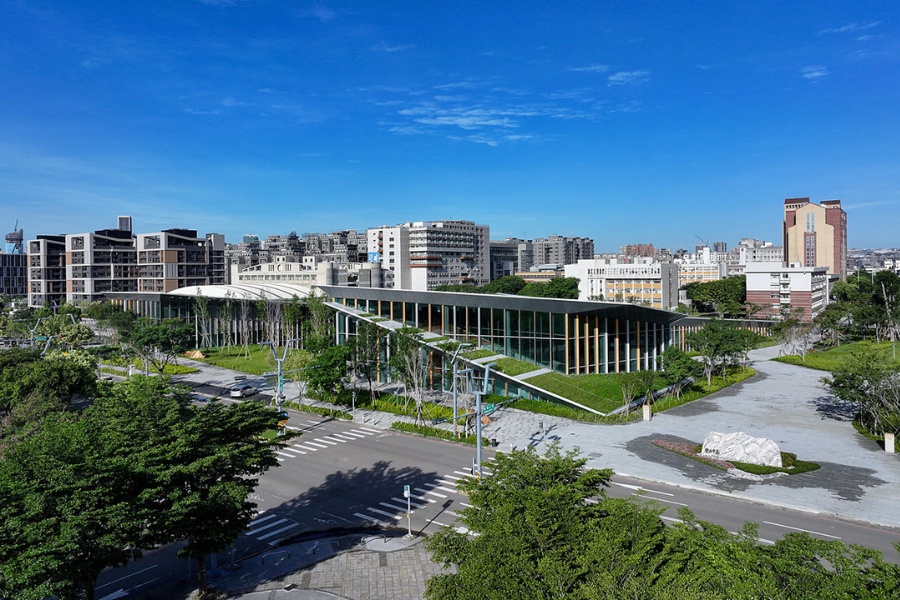
Located within the Shuinan Economic and Trade Park, Feng Chia University’s Virtuosi Hall has been praised as the area’s “lowest and greenest” architectural landmark.
Notably, the site of Virtuosi Hall holds deep historical significance—once serving as a WWII kamikaze airbase. Feng Chia University has transformed this land once tied to war into a sanctuary for education, symbolizing a transition from conflict to peace, and from isolation to shared community.
Designed with an “open‑campus” philosophy, the building removes traditional walls and seamlessly connects the campus with the adjacent Central Park. By sharing green space with the public, the project breaks down the barrier between university and city, embodying the spirit that “the greatness of a university lies in serving the common good.” Students and local residents walk, rest, and interact here, realizing true spatial democracy and civic engagement.
Feng Chia University emphasizes that great architecture itself is an essential component of environmental education. Virtuosi Hall’s meticulous attention to light, acoustics, spatial proportions, and materiality aims to offer students an elevated sensory experience—bringing aesthetic education beyond the classroom and into everyday life.
The recognition of Virtuosi Hall not only sets a new benchmark for urban spatial design in Taichung but also highlights the university’s proactive role in urban development and sustainability. Through this building, Feng Chia University conveys that architecture is not merely a physical shelter, but a vessel that guides people toward goodness, beauty, and learning—fulfilling the educational vision of “Greatness, Goodness, and Shared Joy.”
Share: