

Dedicated and United, Moving Forward with Agility—Empowering Education to Find Its Point of Impact
Cheng-Shu Kao, Chairperson; Wei Wang, President; Eric Kuo-Hao Tang, Vice-President; Shwu-Ting Lee, Vice-President, Feng Chia University
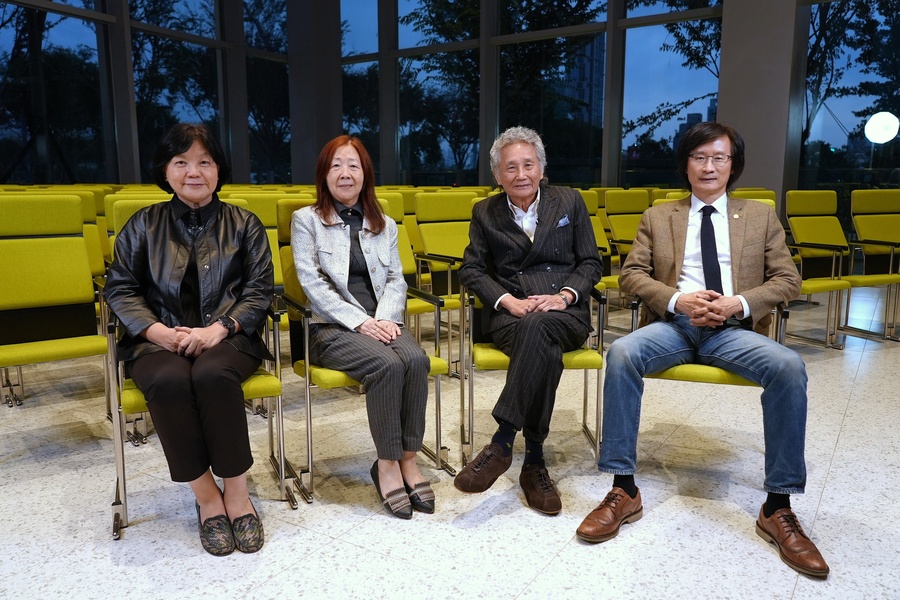
Cheng-Shu Kao, Chairperson; Wei Wang, President; Eric Kuo-Hao Tang and Shwu-Ting Lee, Vice-Presidents, Feng Chia University
Within the inspiring setting of Virtuosi Hall, and on the occasion of the 400th issue of FCU Monthly, Cheng-Shu Kao, Chairperson of Feng Chia University, reflected on the significance of this special interview. “This is not an interview of one individual,” he said. “It is an interview shared by the four of us—President Wei Wang, Vice-Presidents Shwu-Ting Lee and Eric Kuo-Hao Tang, together.” He recalled the original vision for the magazine conceived years ago by senior alumni at the Taipei Alumni Association, a vision that has been steadily realized over time. Much like Feng Chia University’s own journey, its achievements are not the result of isolated moments, but the collective accumulation of generations of teams moving forward together.
Whether speaking of the early days of founding the university or launching the publication, Chairperson Kao repeatedly expressed gratitude, appreciation, and hope. He thanked the Board of Trustees, former presidents, countless faculty and staff members, students, and alumni for making shared ideals a reality. In the face of global uncertainty, he emphasized that education has never been a short-term endeavor, but a mission that must be measured on a centennial scale. As such, Feng Chia University chooses to focus on doing things well in the present—creating an environment where faculty, staff, and students can learn, live, and work with confidence and dignity. This philosophy also underpins the creation of Virtuosi Hall: a space designed to support growth through mutual encouragement, and to cultivate a campus culture that is dedicated yet not isolating, diligent yet filled with shared joy.
“Education is a century-long undertaking—one that must be evaluated over more than a hundred years,” Chairperson Kao concluded. “What we can do at this moment is to place students at the center, and ensure that our colleagues find fulfillment in their work.”
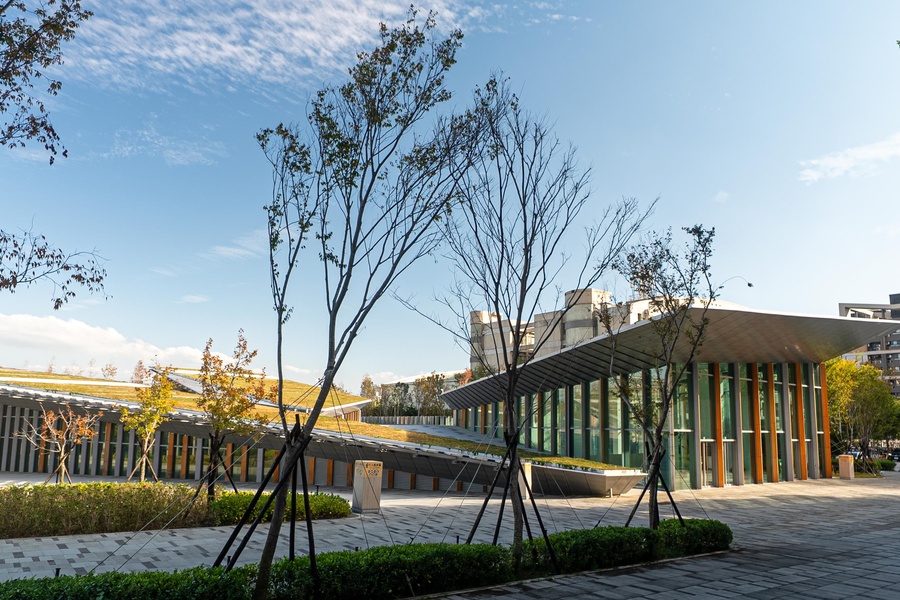
Virtuosi Hall at Feng Chia University
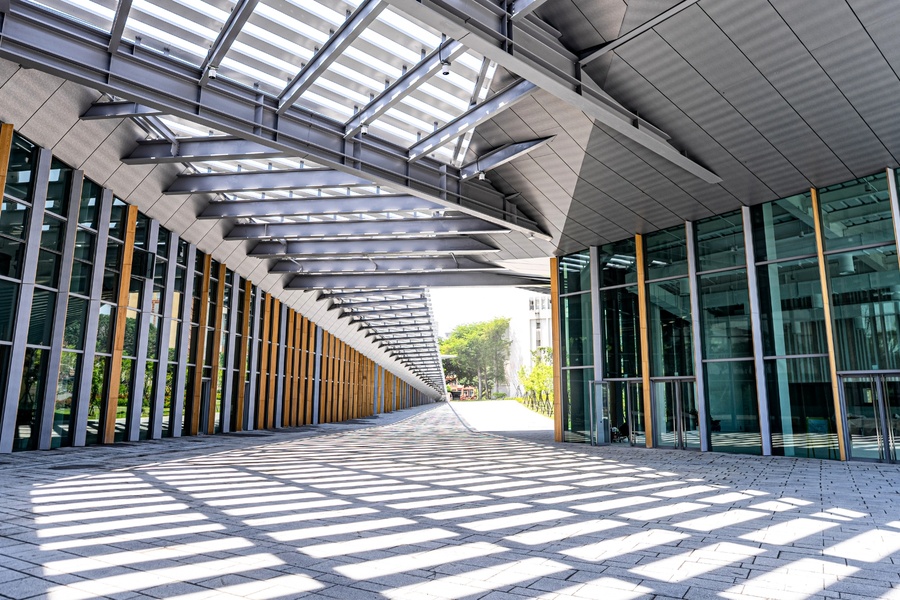
The refined visual design of the Grand Plaza at Virtuosi Hall.
Dedicated and United, Riding the Momentum to Co‑Create the Blueprint for Education
Marking the milestone of the 400th issue of FCU Monthly, President Wei Wang first extended her congratulations, noting that this achievement represents not only a rare landmark, but also an important platform through which society can better understand Feng Chia University’s educational philosophy and alumni spirit. She expressed special appreciation for the long-standing trust and collaboration among the Board of Trustees, academic faculty, and administrative teams—collective efforts that have fostered a university culture described as “rising against the wind and advancing with momentum.” Speaking of the University’s positioning, President Wang emphasized that Feng Chia University has always been an institution guided by ideals and firm educational convictions. Beyond cultivating students’ professional competencies, FCU places equal importance on general education and humanistic literacy, remaining at the forefront of educational innovation. “Our goal is not only to help students succeed professionally,” she noted, “but to help them grow as responsible and well-rounded individuals.”
In terms of organizational culture, President Wang described FCU as a dedicated and united learning organization, where both faculty and staff are encouraged to continuously improve. Through systematic training programs, cross-disciplinary lectures, and the integration of technology, the University empowers its colleagues while ensuring that institutional systems respond effectively to real-world needs. She also highlighted the vital role of alumni support—whether through backing student competition teams or the deep bonds forged through alumni associations at home and abroad—as a key asset driving FCU’s sustained growth. “Looking toward the next stage of educational development, we will continue to place strong emphasis on internationalization,” President Wang added. “Regardless of students’ backgrounds or family circumstances, once they come to Feng Chia University, we are committed to providing opportunities for them to engage with the world. We want our students to carry a map in their minds—knowing where they are headed, and having the ability to get there.” This commitment to students’ futures outlines a clear and forward-looking blueprint for the University’s continued progress.
Responding to President Wang’s reflections on institutional development and internationalization, Chairperson Cheng-Shu Kao spoke about the EMBA Grand Alumni Gathering held on December 21, 2025, during which Alumni Association President Ms. Chun-Kan Chen donated NT$1 million, designated specifically to support students’ overseas exchange and learning opportunities—ensuring that students from different family backgrounds can stand on equal footing.“From financial support for students’ international learning experiences to the careful accumulation of every brick and beam within Virtuosi Hall, the development of Feng Chia University has never been achieved through isolated efforts,” Chairperson Kao remarked. “It is the result of the long-term dedication and collective commitment of countless alumni and colleagues. We are deeply grateful.” While affirming that education has the power to transform lives, Chairperson Kao also emphasized the importance of remaining clear-minded and humble amid rapid global change. “We are confident,” he said, “but we must not become complacent. The pace of change is too fast. That is precisely why we must do what needs to be done—and do it even better.”
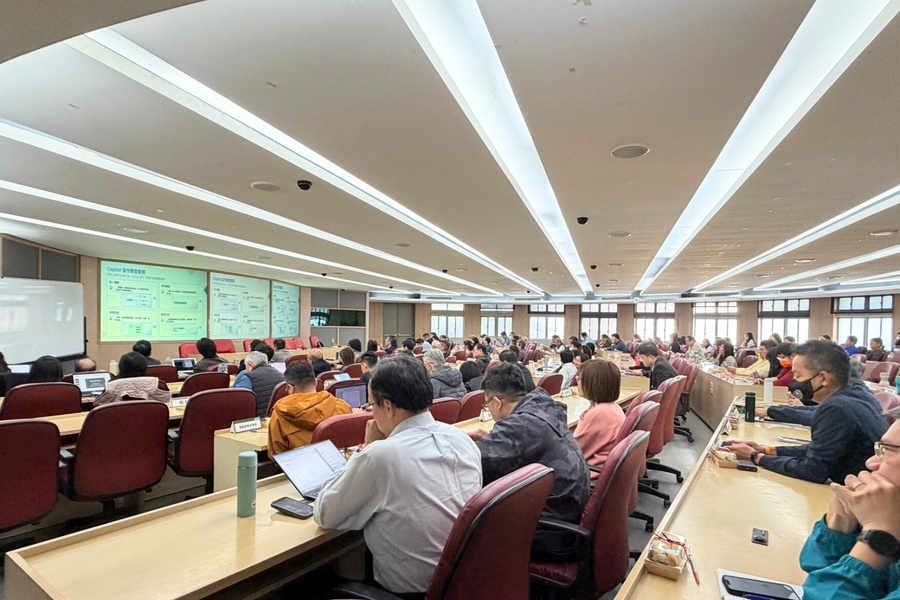
The Microsoft Copilot Intelligent Workplace Innovation Competition encouraged campus administrative teams to address real operational pain points and leverage Microsoft Copilot to optimize workflows and drive innovation.
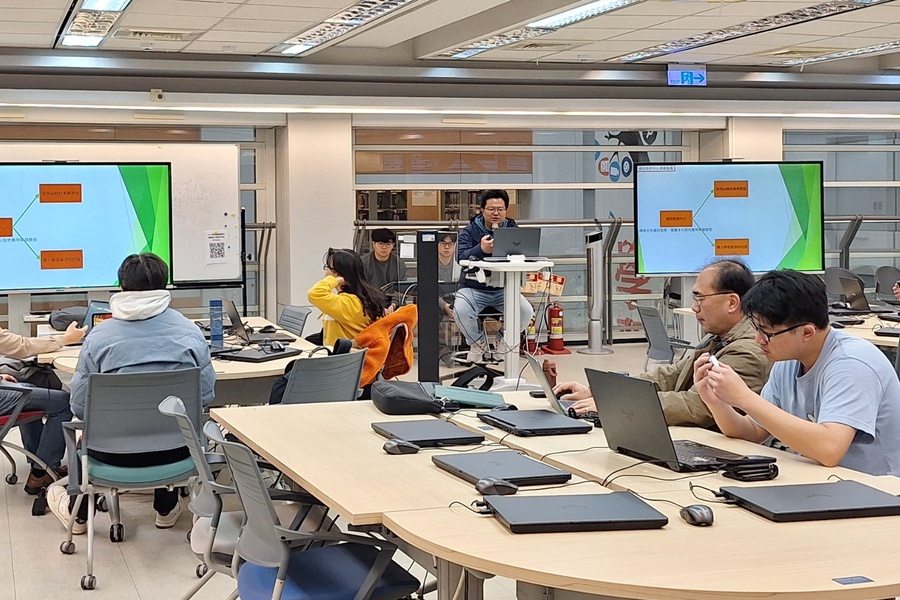
The Information Teaching Center of the Academy of Innovation hosted the “NVIDIA DLI: Fundamentals and Practical Applications of Deep Learning” workshop.
Positioned on the Global Map: Leveraging International Strengths to Find Your Point of Impact
Vice President Shwu-Ting Lee shared that in November 2025, twelve professors from five of Italy’s leading architecture and design institutions—spanning the fields of information and electrical engineering, business, and architecture—made an unprecedented joint visit to Feng Chia University. They attended “Italy–Taiwan Co‑Creating the Future 2025: Culture × Creativity × Sustainability,” co-hosted by the Taichung Architectural Culture and Education Foundation and Feng Chia University. Through highly focused planning, the program enabled faculty and students to gain an in-depth understanding of a country—from academia and industry to everyday cultural life—through direct, lived experience. “We know that Taiwan is a treasure,” Vice President Lee noted. “What matters more is letting others see it. The starting point of international exchange is often not expertise, but friendship. Mutual understanding comes first; collaboration follows naturally.” She also shared that during the visit, Italian scholars were taken to Bodhisattva Monastery and Guoguang Flower Market in Taichung, experiencing Taiwan’s warmth and hospitality—from architectural scale and urban textures to the vitality of local markets—moments that became lasting, take‑home experiences embedded in each other’s lives.
International mobility, she emphasized, allows perspectives, horizons, and vision to take their place on the global stage. She has witnessed profound transformations in students through repeated journeys abroad and returns home: some bring back what they have learned overseas to Taiwan, while others continue contributing to local industries, forming a virtuous cycle. Internationalization should not exist only beyond the campus gates, but serve as a force that helps students locate themselves on the world map and apply their strengths with purpose. “Step out, integrate into the world, and find the point on the map where you can make a meaningful contribution.”
Responding to Vice President Lee’s reflections on international exchange in practice, Chairperson Cheng‑Shu Kao emphasized that Feng Chia University’s internationalization has never been achieved overnight. Rather, it is the result of long‑term accumulation of networks, trust, and action. Looking back twenty to thirty years, he noted, collaboration with top-tier international universities once seemed unimaginable. Today’s “Italy Week” is made possible through the support of educational partners and the collective investment of society, including the Taichung Architectural Culture and Education Foundation and industry partners. From hosting international scholars on campus and enabling students to pursue immersive overseas learning, to gradually building international exchange networks over years, and even inviting renowned Japanese architect Kengo Kuma to participate in campus design, Chairperson Kao remarked, “These choices may seem fragmented at the time, but when accumulated over the long term, they shape a university’s unique character and global vision. As long as we truly take action, students will have the opportunity to step onto the world stage and learn.”
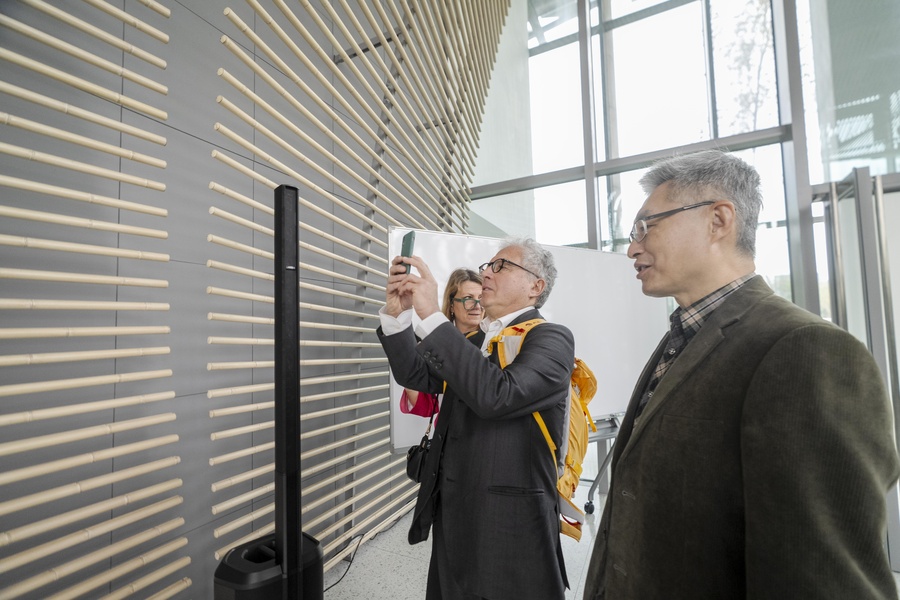
Italian professors visit Virtuosi Hall at Feng Chia University.
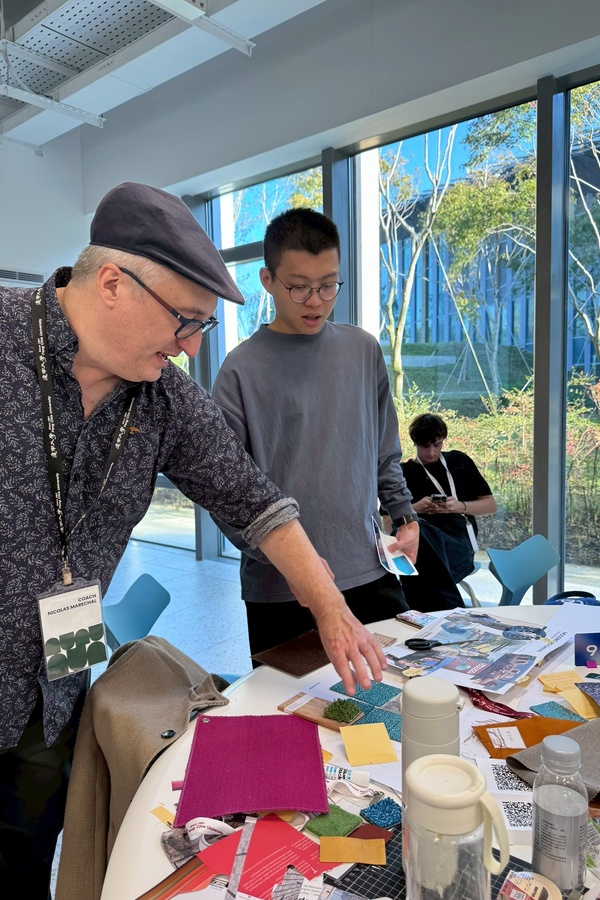
Participants engage in the “POLI.design × Feng Chia University Workshop” during Italy Week.
Riding the Wave of Technology: Redefining Learning Models and the Role of Education
Facing the rapid transformation of the world—and the redefinition of higher education’s role—driven by AI, Vice President Eric Kuo-Hao Tang began by reflecting on the original calling of educators. “Those who remain in education for the long term often hold a belief-like commitment,” he noted. “When you truly believe in an educational ideal, you stop calculating costs and are willing to keep moving forward.” Citing a BBC study, he pointed out that 52 percent of jobs worldwide no longer require a university degree, as industries shift from a degree-oriented to a skills-oriented model—forcing universities to confront their fundamental value. When the cost of accessing knowledge approaches zero, universities are no longer monopolies of knowledge, but must instead become critical spaces for guiding self-directed learning, integrating capabilities, and cultivating sound judgment. In response, Feng Chia University has advanced the concept of “One Lifelong Curriculum,” enabling more than 20,000 students to pursue individualized learning pathways. Academic programs have further modularized curricula into second majors, minors, and stackable micro-credentials, transforming interdisciplinary learning from an aspiration into practice.
To address practical challenges such as course conflicts and decision-making complexity, FCU is experimenting with language models to generate personalized course recommendations for students. Faculty course content is also being converted into curated digital learning materials, while efforts are underway to develop intelligent teaching assistants (TAs) equipped with feedback and analytics capabilities to relay learning insights back to instructors, enabling real-time instructional adjustment. This transformation extends to the faculty side as well, with interdisciplinary teams visiting City University of Hong Kong to study AI applications in education and actively engaging in AI for Science research and industry collaboration. “This is a long-term journey that requires patience and strong teamwork,” Vice President Tang emphasized. “Step by step, we move closer to the university we envision.”
Reflecting on organizational leadership, Chairperson Cheng‑Shu Kao observed, “Organizations that truly go the distance are never those where everyone is the same, but those willing to let different professions play their respective roles and enable one another.” Acknowledging that technology and AI are not his personal strengths, he stressed the importance of trusting expertise and respecting professional judgment. While Feng Chia University may not possess the most abundant resources, it understands how to steadily accumulate energy—turning a research project or a cross-university collaboration into greater collective momentum over time. Internally, unity and collaboration are essential; externally, building goodwill and partnerships allows resources to converge and be transformed into educational strength. Even when opinions within the team differ, Chairperson Kao welcomes such dialogue, believing that a university should embrace diverse voices and ongoing discussion. No matter how rapidly technology evolves, he concluded, education ultimately returns to human understanding, collaboration, and genuine care for students.
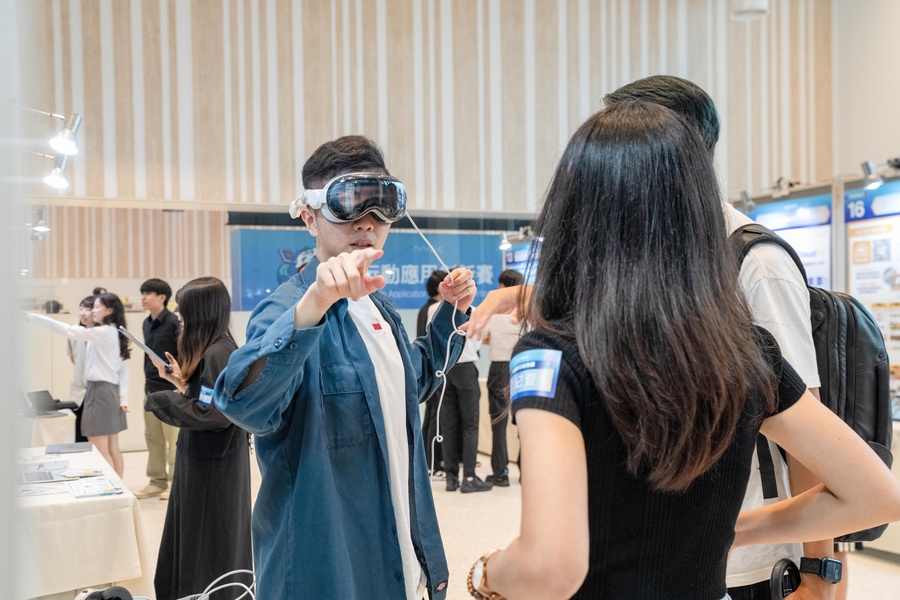
The grand finale of the 10th Mobile Application Innovation Competition was held at Virtuosi Hall, Feng Chia University.
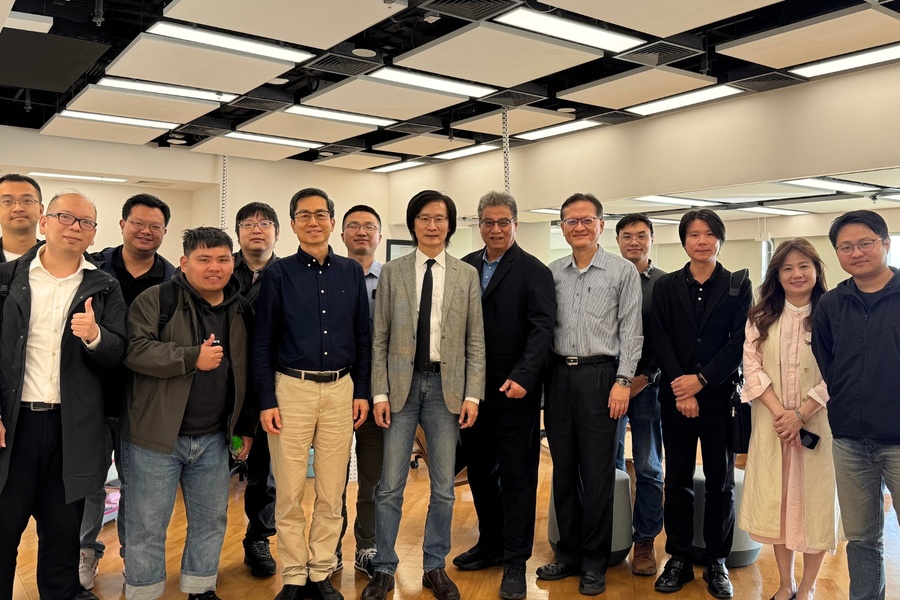
In 2025, Vice President Eric Kuo‑Hao Tang led a delegation to visit the Hong Kong Institute of Artificial Intelligence and Science.
Collective Good, Agile Progress: The Power of Education and Innovation
Responding to the discussion, President Wei Wang noted that the development of Feng Chia University is rooted in teamwork and the intergenerational exchange of wisdom. She cited the “academic clusters” concept proposed by the Chairperson as an example, emphasizing how faculty members from diverse disciplines and backgrounds collaborate, mentor one another, solve problems collectively, and advance institutional development. “Only through this kind of collaboration can we truly consolidate our strengths and attract more young faculty to align with the nation’s future development priorities,” President Wang explained. Referring to Chairperson Kao’s well-known principle of “small steps, fast pace,” she highlighted that steady yet agile progress is essential to building team cohesion and shared consensus. “We need to move in the same direction—and move quickly—if we are to achieve our goals.”Expressing strong confidence in Feng Chia University’s future, President Wang concluded that this shared sense of unity and alignment will continue to be transformed into a driving force for education and innovation.
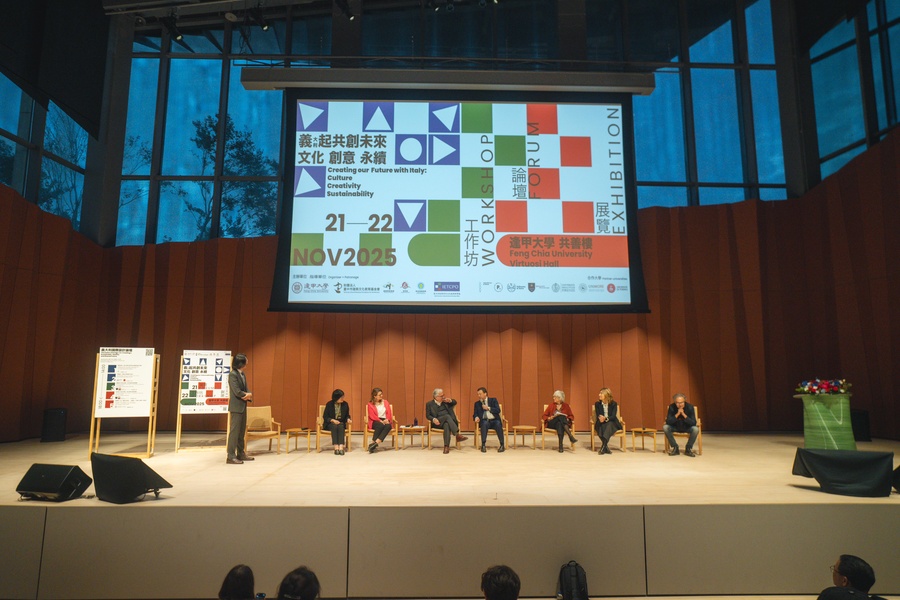
“The Power of Design: Shaping a Sustainable, Healthy, and Shared Future” International Architecture Forum
Share: